
Baltic has updated its Aquascaphe GMT to MK-II specification, and the headline change sits inside the case rather than on top of it. The original Aquascaphe GMT, introduced in 2020, ran a Swiss Soprod movement configured as what’s known in the trade as an office GMT: the GMT hand could be set independently, but the local hour hand stayed fixed. The MK-II replaces that architecture with the Japanese-made Miyota 9075, an automatic true GMT caliber that allows the local hour hand to jump independently while crossing time zones, without stopping the watch or disturbing the second time zone display. That single functional shift is the reason nearly everything else on the watch needed re-engineering.
Case Design and Construction
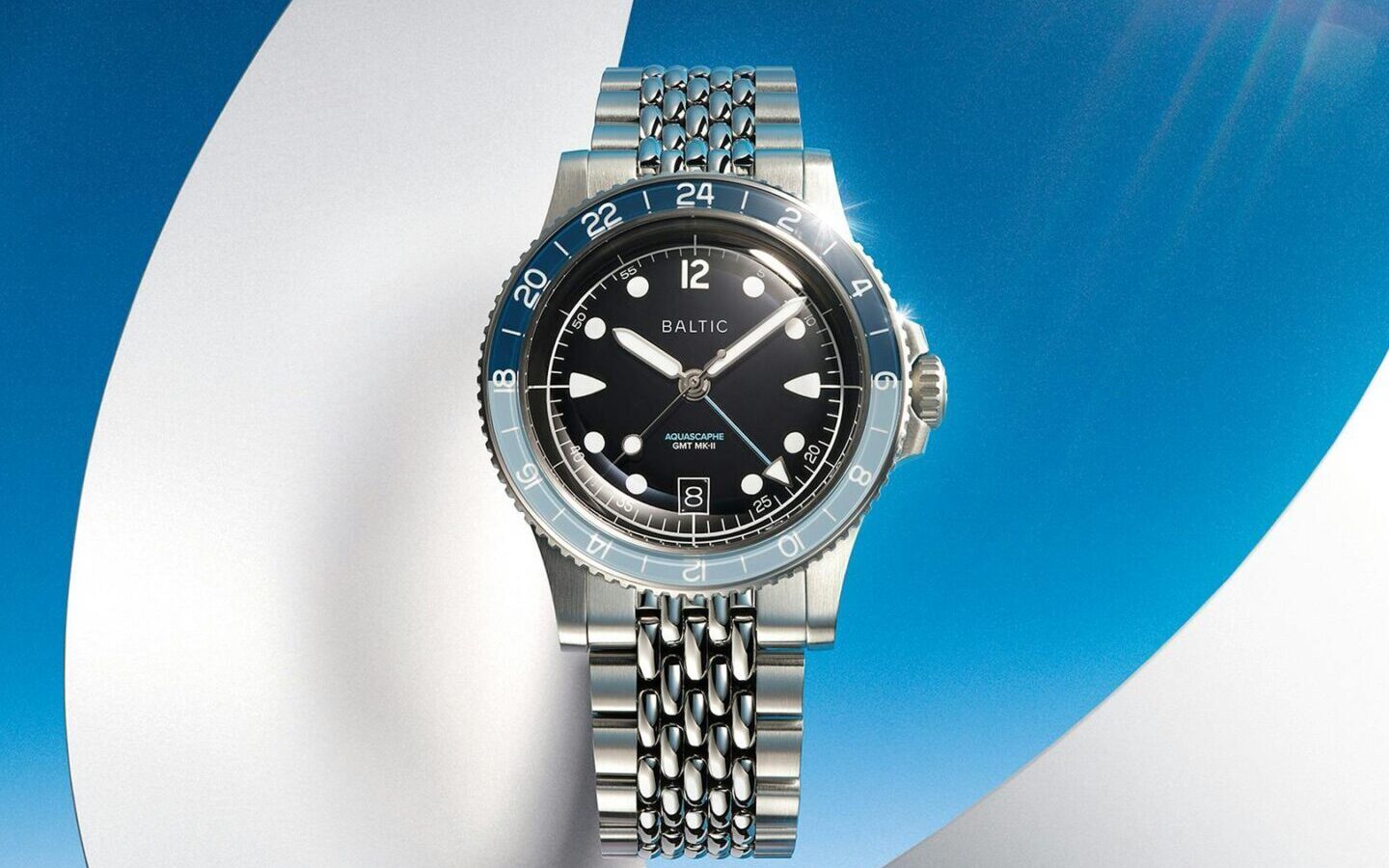
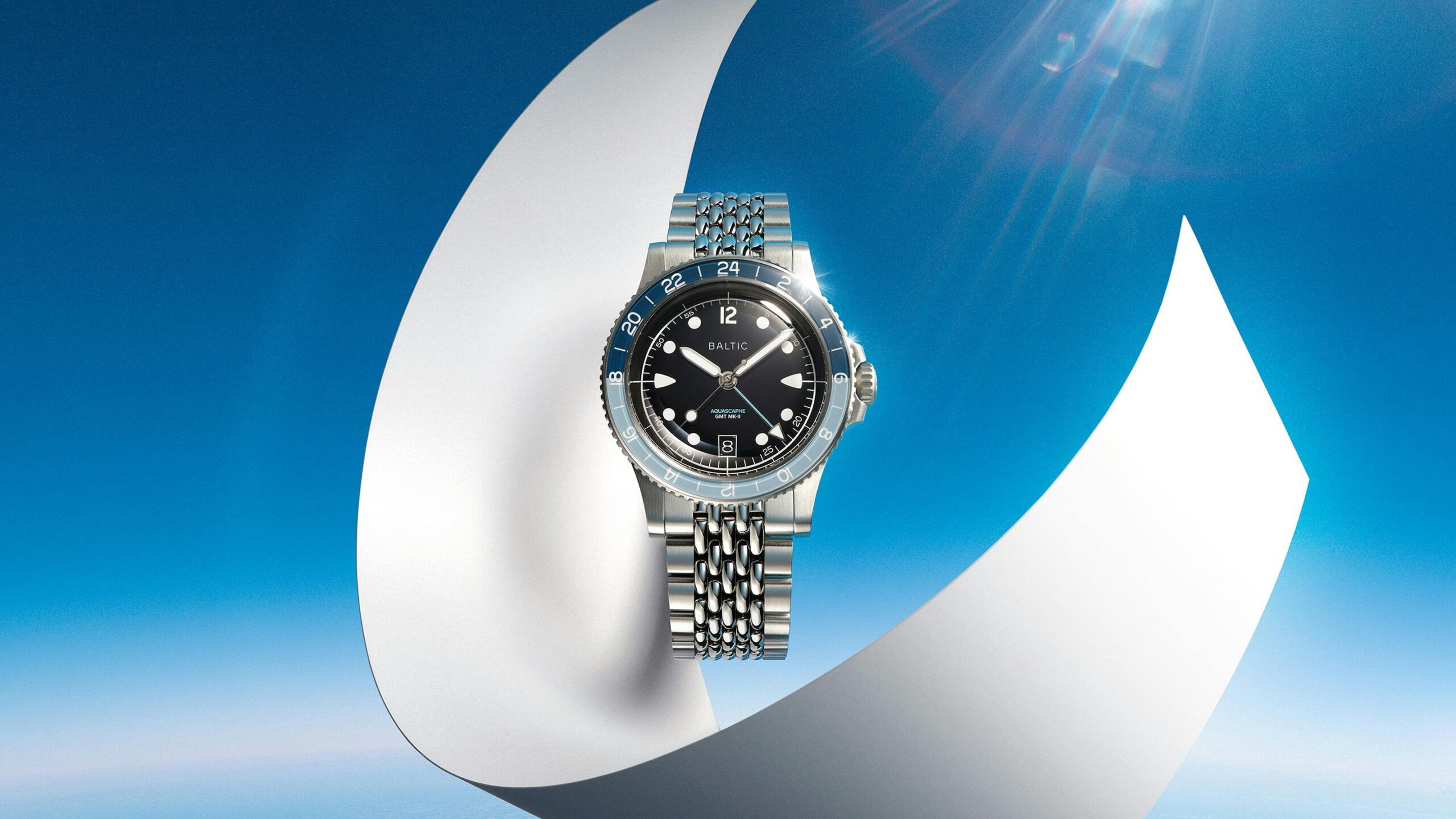
The case itself carries over the sharper geometry Baltic introduced on the standard Aquascaphe MK-II the previous year, now applied to the GMT model for the first time. Machined from 316L stainless steel, it measures 39.5mm in diameter, 47mm lug-to-lug, and 13.8mm thick (12mm without the crystal). Those are compact numbers by contemporary GMT standards, and notably the case has not grown to accommodate the new movement or its added crown guard. Lugs are wider than before and cut with sharper angles, finished with vertical brushing across their top surfaces. A double-domed sapphire crystal with internal AR coating sits above the dial, and a steel caseback closes the back. Water resistance jumps from 100m on the original Aquascaphe GMT to 200m here, a meaningful practical upgrade for a watch pitched as a genuine tool piece rather than a desk diver.
Crown, Bezel, and the Mechanics of Setting
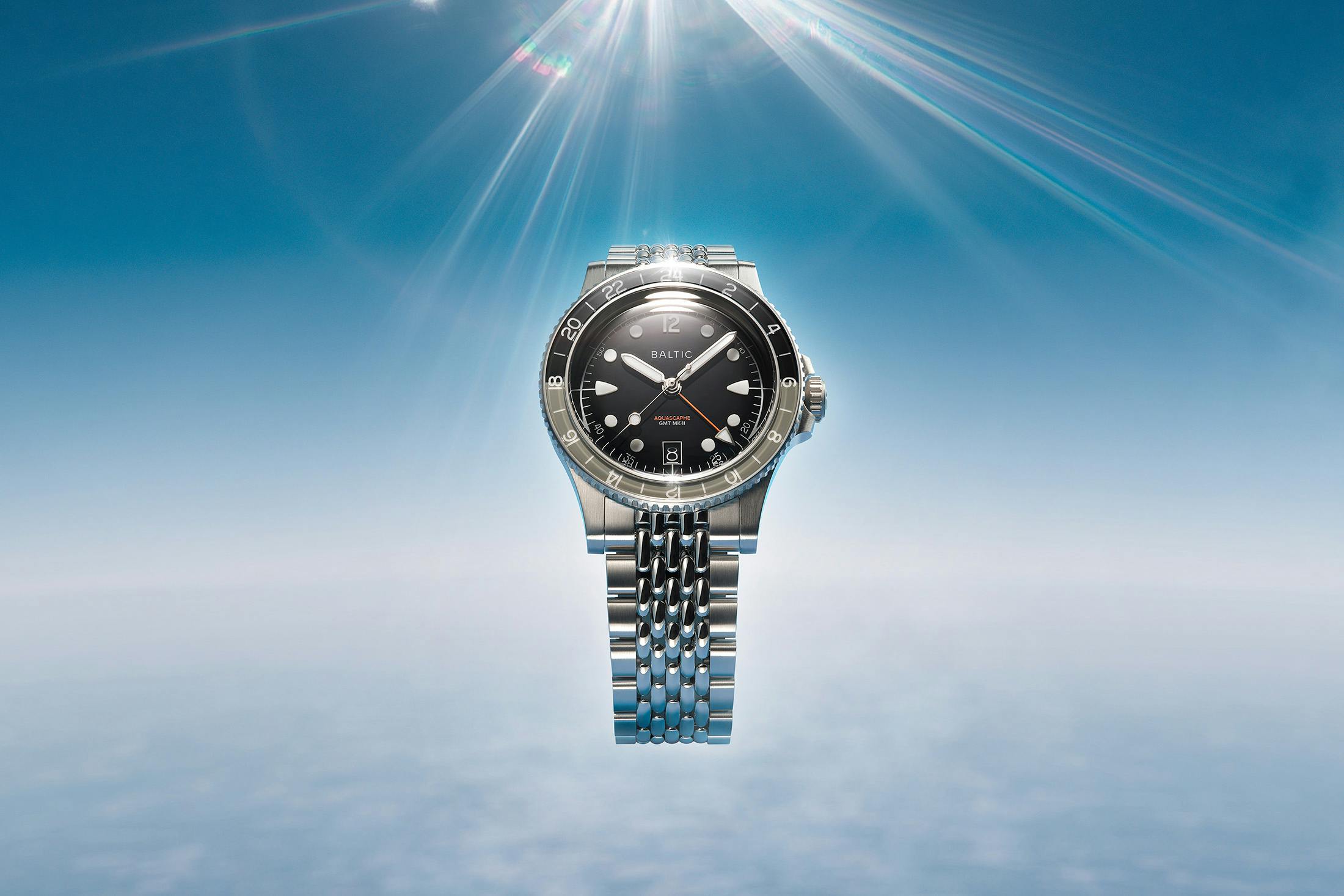
The most visible consequence of the movement swap is the crown guard, a first for this model line. Because a true GMT caliber changes how the wearer interacts with the crown when setting local time versus home time, Baltic wrapped the screw-down crown in a guard structure, giving the watch a more angular profile at 3 o’clock and, incidentally, some added protection against knocks. The bezel itself remains bidirectional with a 24-hour scale, clicking through 24 positions, and its sapphire insert matches the material of the crystal above it. Four configurations exist at launch, each with a distinct two-tone bezel: red paired with blue, blue with light blue, black with grey, and green with blue. The bidirectional action is worth noting on a GMT tool watch, since it lets the wearer track a second time zone by rotating the bezel in either direction rather than being locked to one.
Dial Layout and Finishing
All four versions share a deep glossy black dial, a deliberate simplification that lets the bezel colorway do the visual differentiation rather than the dial itself. Baltic fits “super indexes” treated with Super-LumiNova BGW9, and the hour and minute hands have been redesigned with a more faceted profile than the outgoing model, presumably to catch light differently against the glossy surface. A central seconds hand and a central GMT hand share the dial with a date window fixed at 6 o’clock, and the date disc is color-matched to keep that aperture from breaking up the dial’s visual field. It is a conservative, legible layout, the kind that prioritizes function over flourish, which tracks with the tool-watch brief the case and water resistance figures suggest.
Movement Architecture
The Miyota 9075 is the mechanical heart of this redesign, and its specification sheet explains why the rest of the watch shifted the way it did. It runs at 28,800 vibrations per hour (4Hz), delivers a 42-hour power reserve, and handles hours, minutes, seconds, GMT, and date functions in a true GMT configuration. Moving from a Swiss Soprod-based office GMT to this Japanese automatic caliber is a meaningful architectural change, not a cosmetic one, since it alters how the watch is actually used on the wrist when traveling across time zones.
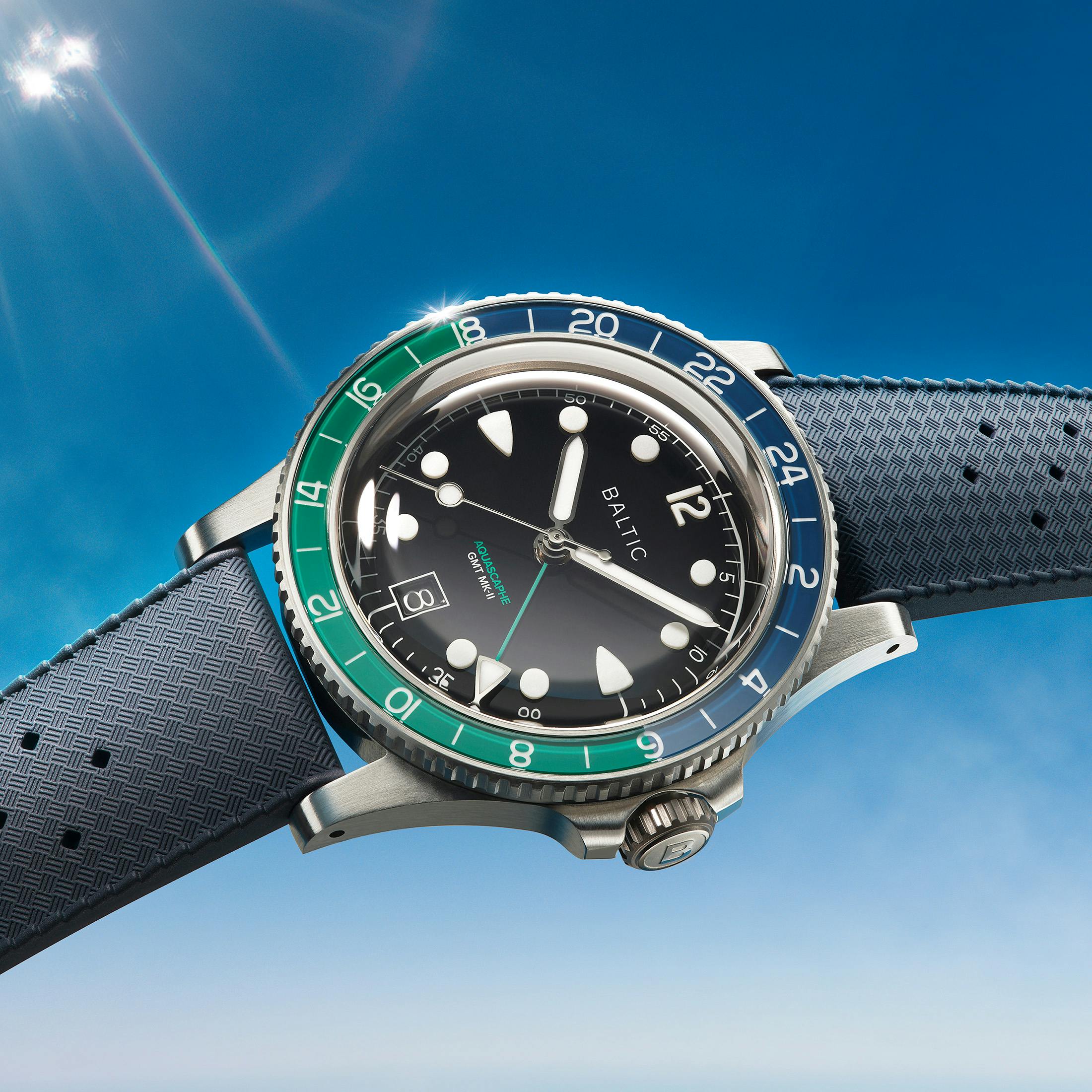
Strap and bracelet options round out the package. The watch ships on Baltic’s Rubber Sport FKM rubber strap as standard, with grey and red dial versions paired to black straps and the blue and green versions on blue straps. Beads-of-rice or flat-link stainless-steel bracelets are also available, both fitted with quick-release spring bars and a 20mm lug width, making strap swaps straightforward for owners who want to switch between rubber and metal depending on use. The Aquascaphe GMT MK-II joins Baltic’s permanent collection, giving the brand a genuine traveller’s GMT at a case size and weight that stays close to its dive-watch roots.