
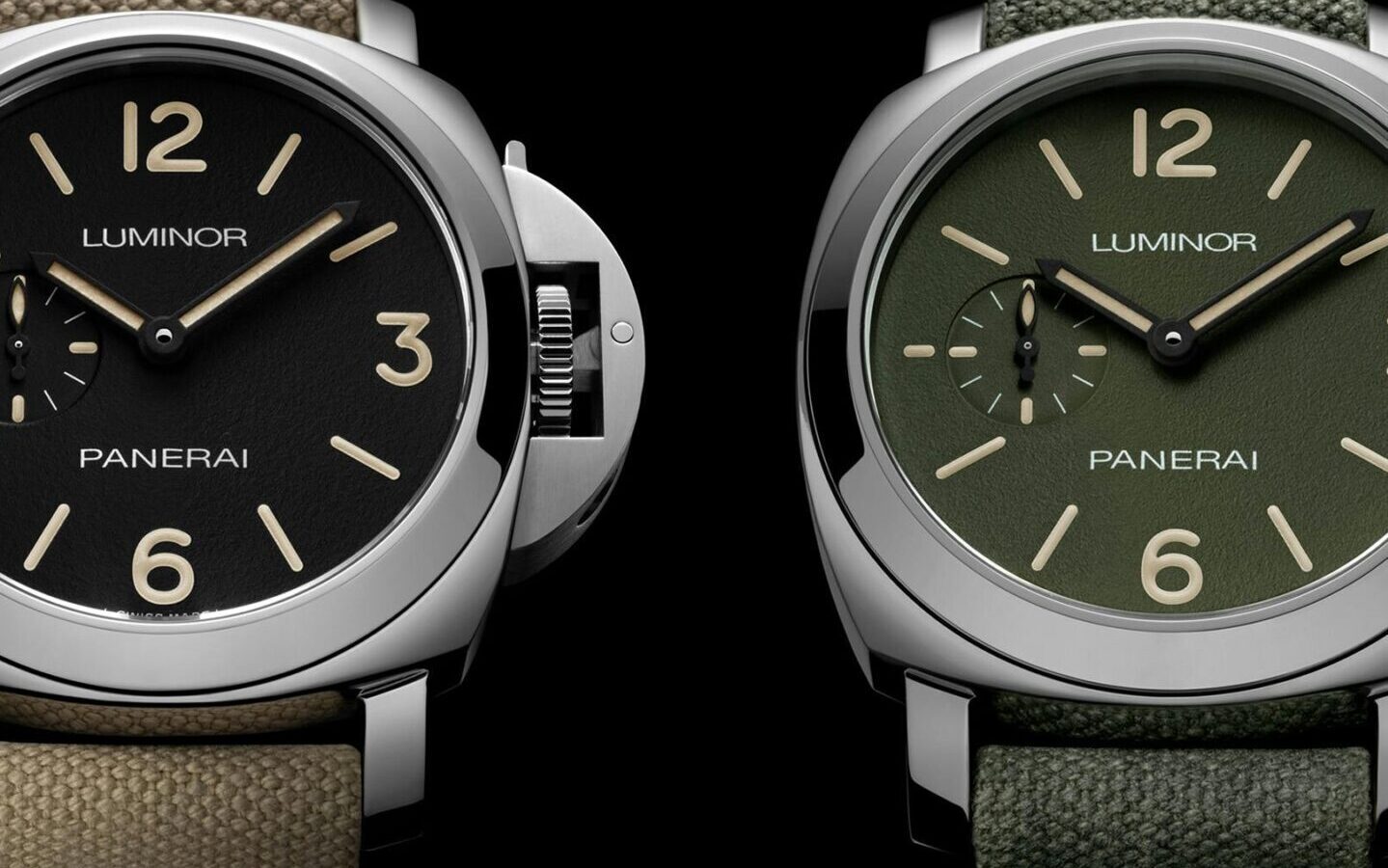
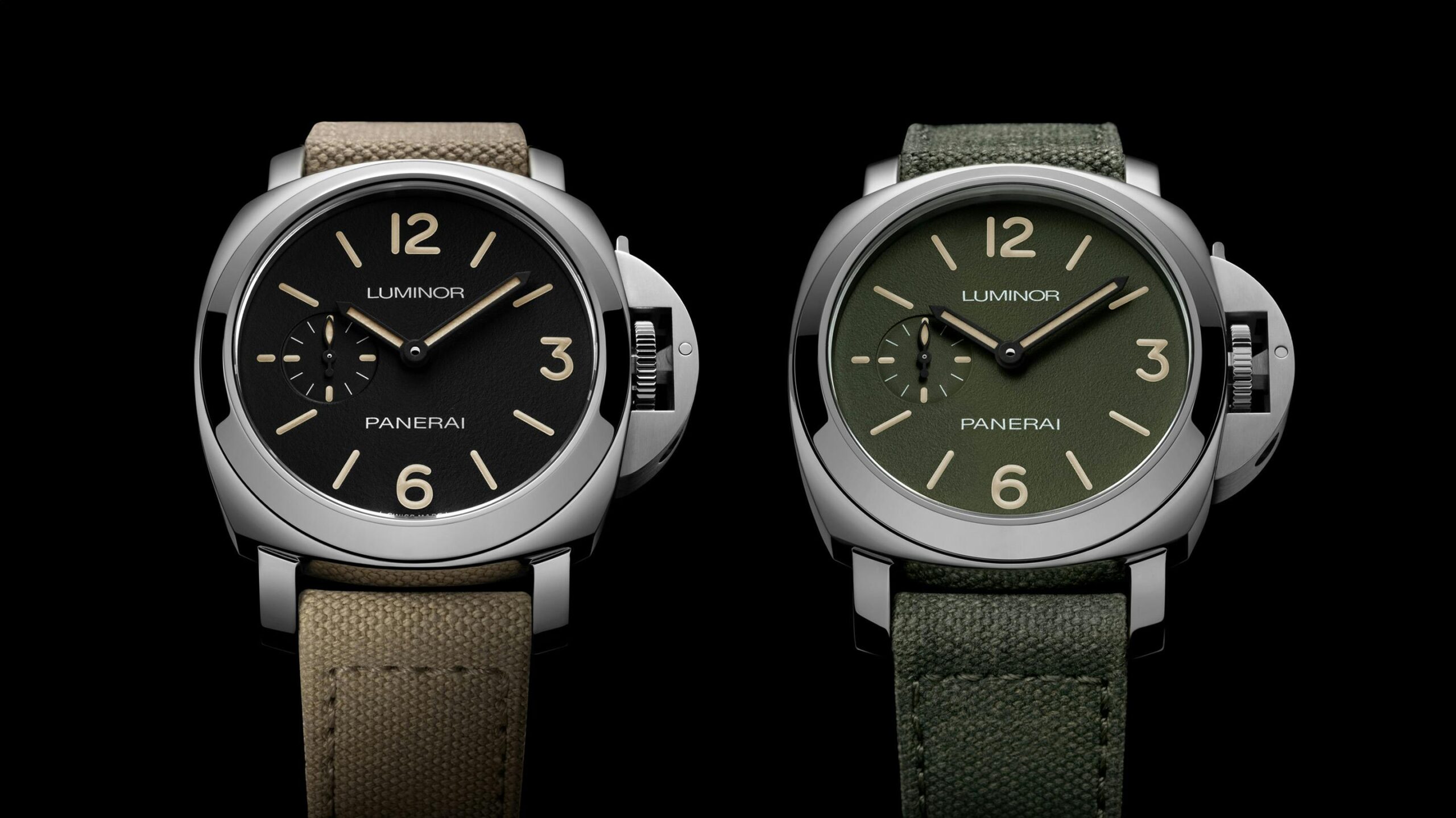
Panerai has taken its cushion-shaped Luminor case down to 42mm for the first time, with the new PAM01710, PAM01711, and PAM01714. It is a modest-sounding number on paper, but it represents a genuine break from the case’s own history: the 1993 debut reference, the 5218-201/A, already reduced the original military 47mm Luminor down to 44mm, and this new trio goes two millimeters further still. That’s the first time this exact monobloc silhouette has appeared at 42mm.
Case design: same bones, tighter footprint
The core architecture hasn’t changed. This is still a sloped bezel sitting atop a rounded-square mid-case, still finished in a mix of brushed and polished surfaces on the standard steel versions, and still fitted with a domed sapphire crystal up top. What’s changed is how tightly that geometry now wraps the wrist. Case thickness comes in at 13.8mm, and while there’s no comparative figure available for the 44mm version, the fact that Panerai held thickness in check while cutting 2mm off the diameter suggests the internal architecture — movement mounting, crystal dome, caseback depth — was reworked as a set rather than simply scaled down proportionally. A cushion case doesn’t shrink cleanly the way a round case does; the corner radii, the lug width, and the crown-guard bridge all have to be re-negotiated relative to a smaller footprint, or the whole thing reads as a shrunken photocopy rather than a coherent object.
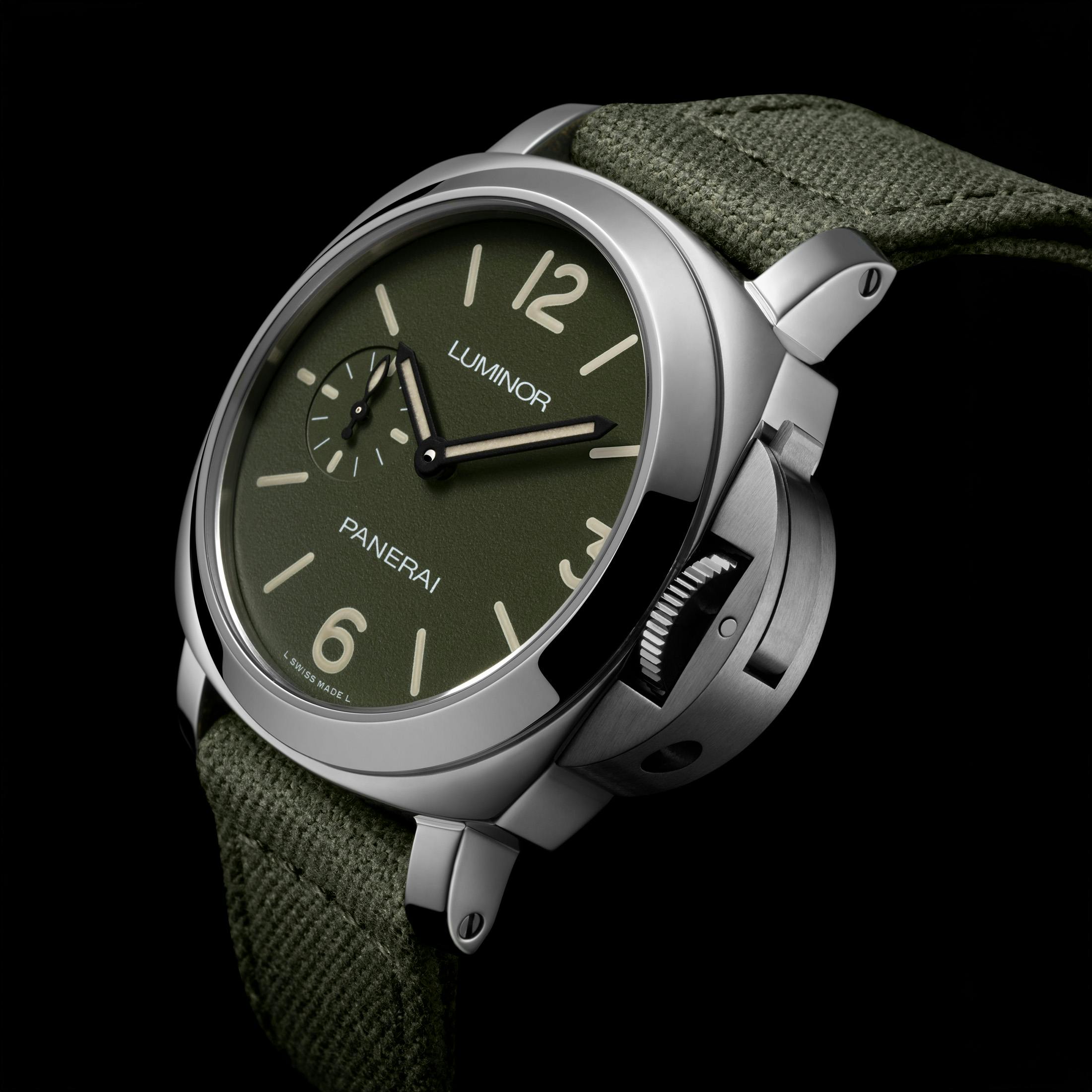
The signature curved crown-protecting bridge on the right flank remains, and it’s arguably the single element that has to work hardest at this new scale. On the 1993 design, that bridge was integrated into the case profile as a structural, load-bearing element rather than a decorative afterthought — it exists to physically shield the crown and lock it down via a lever mechanism. Compressing the surrounding case by 2mm without letting the guard look oversized or the lugs look stubby is a proportioning exercise as much as an engineering one. Based on the finished result, Panerai kept the guard’s relationship to the case corners consistent enough that the watch still reads unmistakably as a Luminor, not a different model wearing the family’s face.
Materials and finish
The stainless steel case on the PAM01710 and PAM01711 carries the expected brushed-and-polished treatment across its planes, standard practice for giving a cushion case’s flat faces and angled bezel distinct light behavior. The PAM01714 breaks from that with a black DLC coating in a matte finish, which changes the read of the case entirely — flattening the surface contrast that brushing and polishing normally create, and pushing the watch toward a more tactical, monotone presence. All three share a closed 12-sided caseback with engraved detailing, and a water resistance rating of 500 meters, which is a serious spec for a case this size and points to the seal integrity of the monobloc-style construction rather than any compromise made in the name of shrinking the shell.
Dial layout and legibility
Inside that case, Panerai has returned to the 1993 dial format rather than modernizing it. The PAM01710 wears a matte black dial with beige printed numerals and a small seconds subdial at 9 o’clock. The PAM01711 swaps in a forest green dial, and the PAM01714 — matching its DLC case — gets a matte blue dial in the same finish and layout as the black version. Numerals, markers, and hand inserts are thick, printed, and coated in Super-LumiNova, sword-shaped hands throughout. The dial is signed “L Swiss Made L,” a direct reference to the brand’s historic switch away from tritium lume, and it’s a detail that ties the reissue’s graphic language back to the original watch rather than treating it as vintage-flavored decoration.
Movement and what the smaller case has to accommodate
Powering the collection is Panerai’s Calibre PAM.980, manufactured by ValFleurier. It’s an automatic movement running at 28,800 vibrations per hour with a 72-hour power reserve from a single barrel, built from 177 components, and it hacks when the crown is pulled — a small but useful detail for anyone setting time against a reference signal. None of that is new engineering territory for Panerai, but fitting it inside a case that’s now 2mm narrower than the 1993 original, while preserving the water resistance rating and the crown guard’s locking function, is the quieter achievement here. The dial layout stays legible specifically because Panerai didn’t try to cram in extra complications or add visual noise to compensate for the smaller canvas.
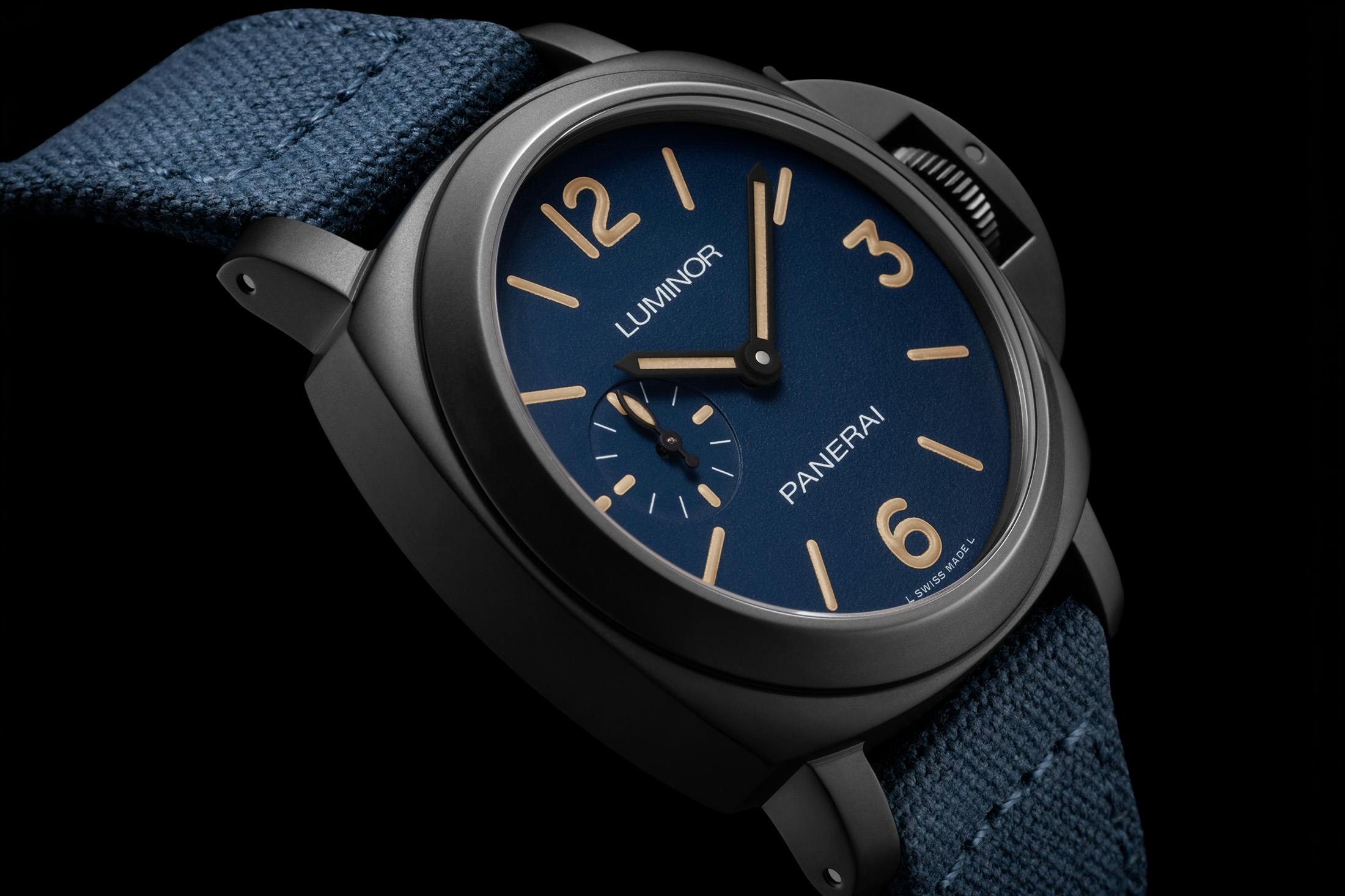
All three references are fitted to canvas straps color-matched to their dials — beige, green, and blue respectively — with the PAM01714 receiving a black DLC-coated pin buckle to match its case treatment. For a brand whose Luminor has spent three decades expanding across sizes, materials, and complications, resizing the original cushion case down to 42mm without disturbing its crown-guard proportions or its case geometry is a straightforward but technically demanding piece of case design, and one likely to matter more to how the Luminor wears going forward than any single dial colorway will.