
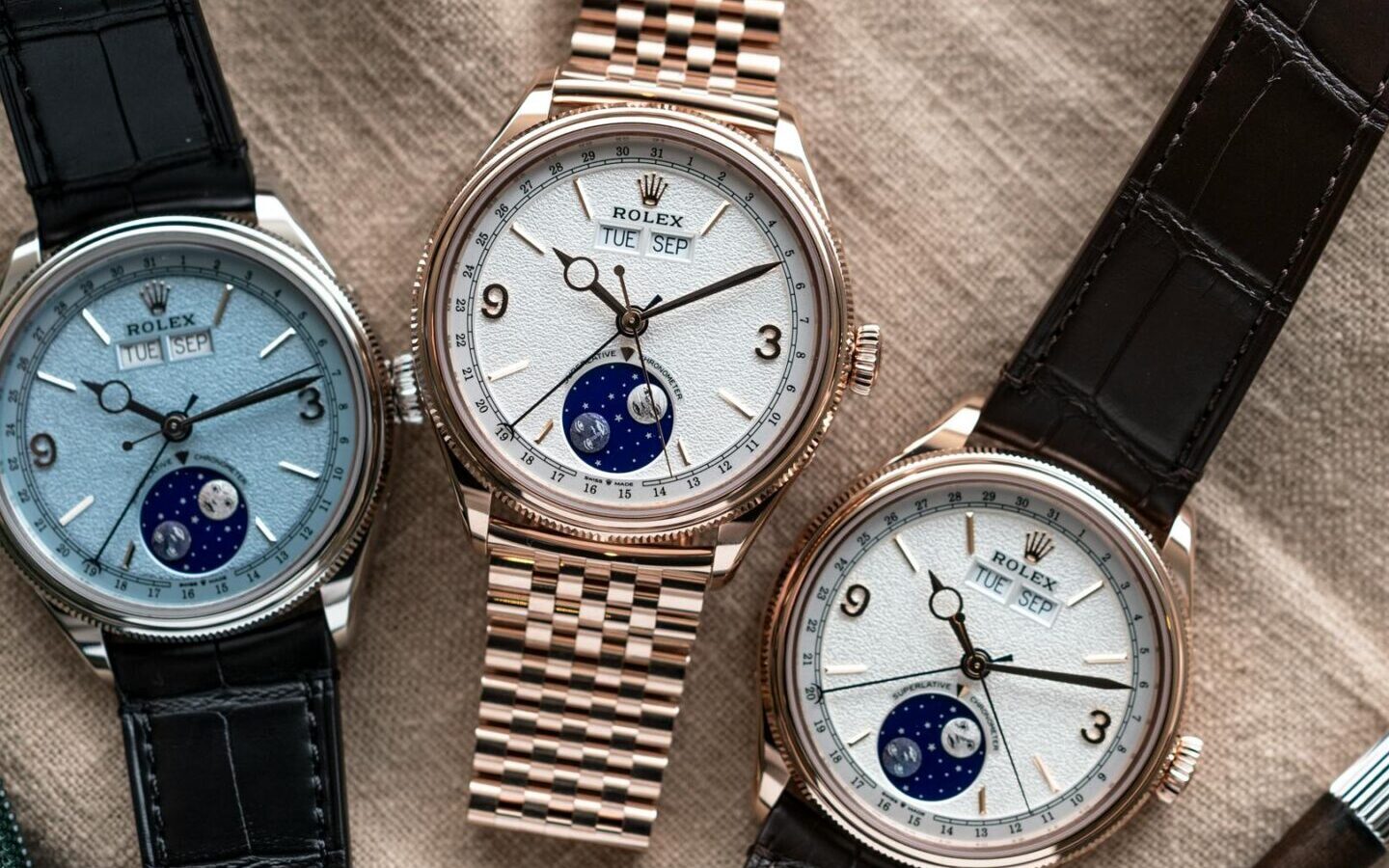
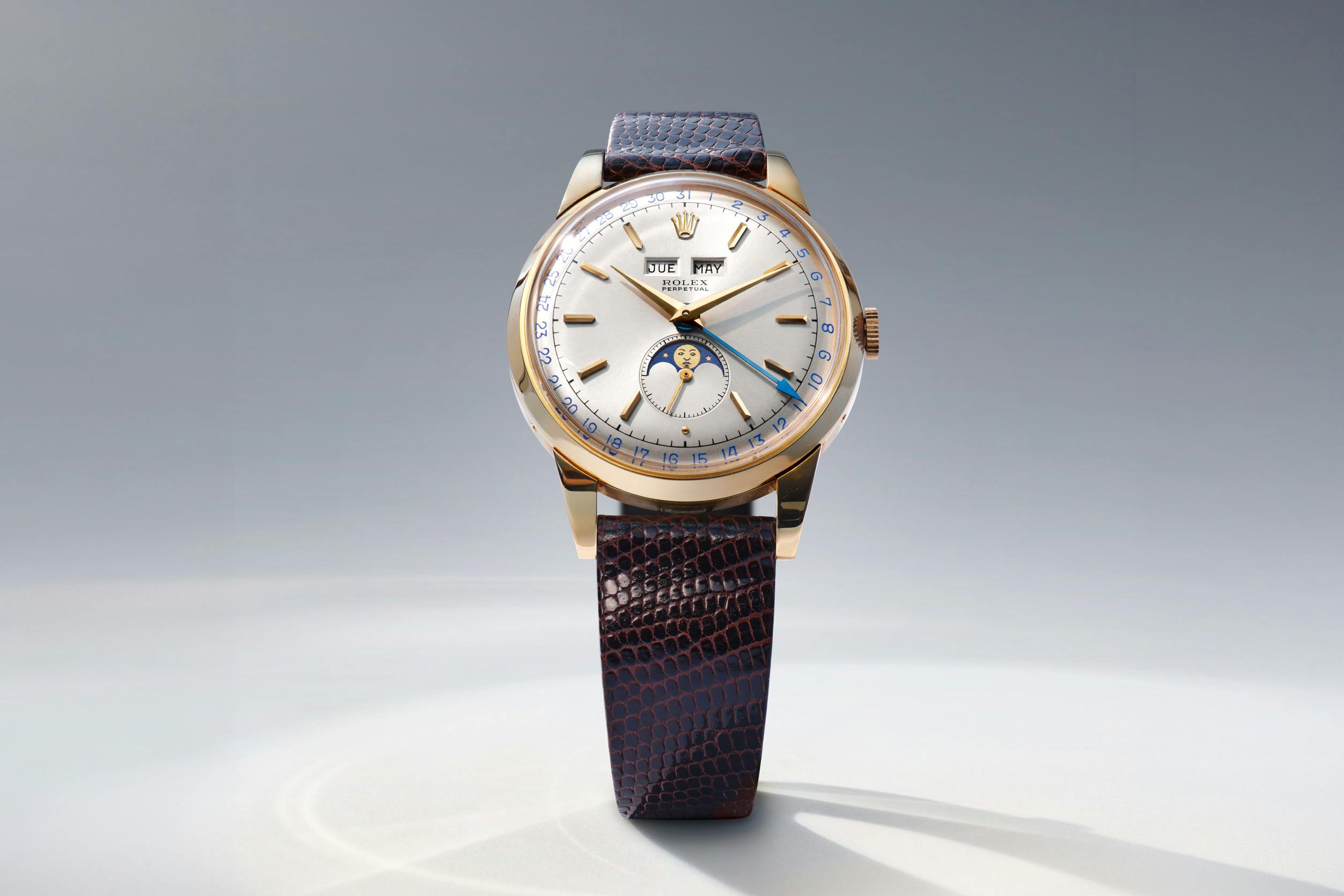
Rolex has revived one of its strangest historical references, and it did so outside of Watches and Wonders, on September 15, 2026 — a scheduling choice the brand has reserved in the past for the Daytona Le Mans and the titanium Deepsea Challenge. The watch in question is the Perpetual Padellone, and for the first time Rolex has made the nickname official. The original, a triple calendar moonphase produced between 1949 and 1953 under reference 8171, was one of only two Rolex watches ever built with that specific complication set, the other being the 36mm reference 6062. Roughly 1,000 to 1,200examples of the 8171 were made, in steel or yellow gold, with silver dials, blue date numerals, and a snap caseback rather than a waterproof Oyster construction. At 38mm, it was oversized for its era, which is exactly why Italian collectors nicknamed it “il Padellone” — the large frying pan.
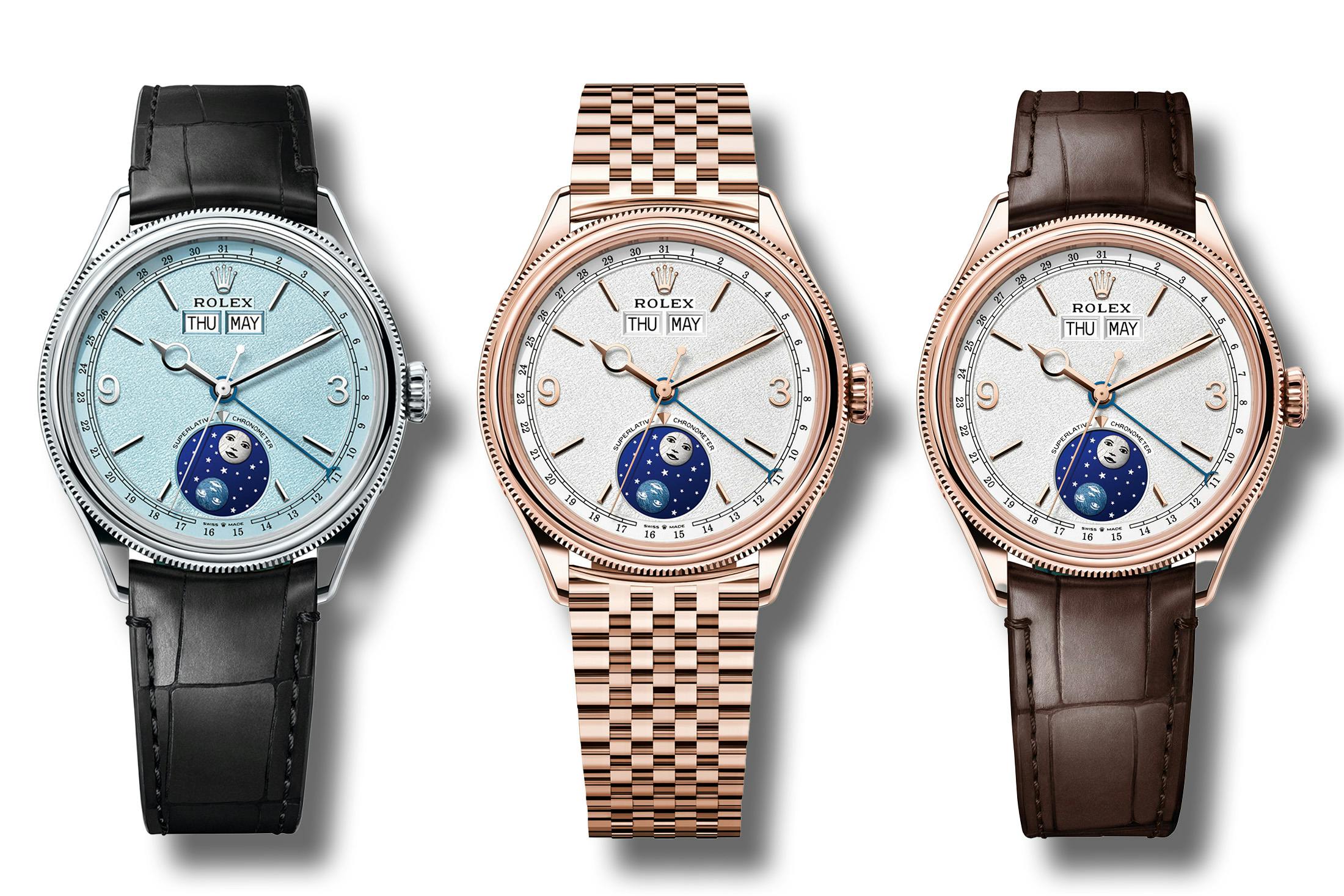
The new Perpetual Padellone does not attempt a literal reissue. Instead it grafts the display architecture of the 8171 onto the case design of Rolex’s Perpetual 1908 collection, the brand’s dedicated dress-watch platform. The result measures 39mm in diameter, 12.20mm thick, and roughly 45mm lug to lug — a footprint nearly identical to the standard 1908, with the added thickness accounted for by the calendar module stacked beneath the dial. Set against the original 38mm case, the new watch is barely larger, which is a notable restraint given how much mechanical content has been added underneath.
Case Design and Finishing
The case is offered in a single configuration: 18k Everose gold, a material new to the Perpetual line, or 950 platinum. Every surface is polished, which keeps the watch visually aligned with the dressier register of the 1908 family rather than the sportier brushed-and-polished contrast finishing found elsewhere in Rolex’s catalog. The bezel is domed and finely fluted, paired with a domed sapphire crystal, both details carried over directly from the 1908 case language rather than reinvented for this reference. Lugs pick up the same gentle chamfering along their top edges that defines the 1908 line’s silhouette.
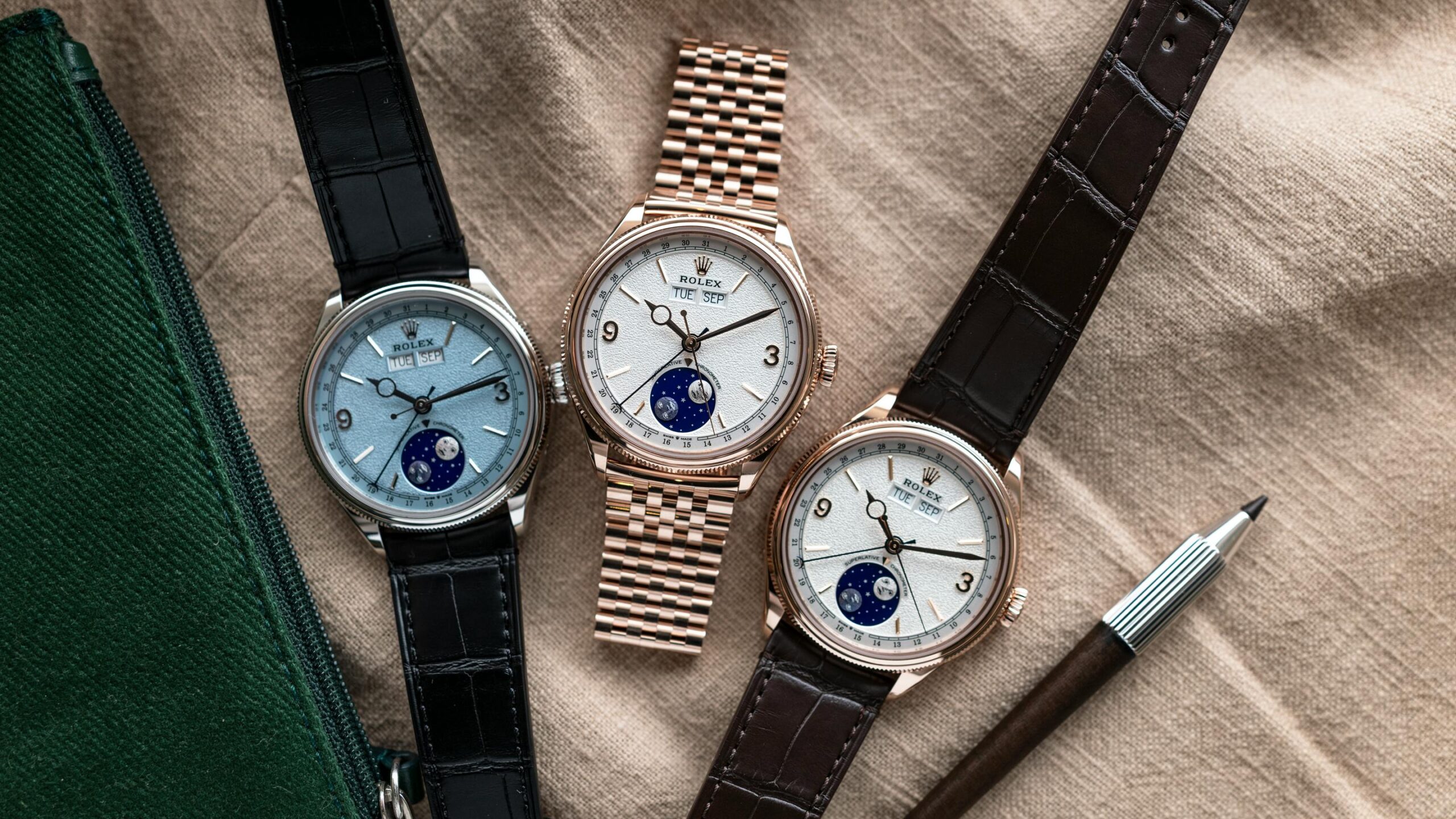
Where the Padellone departs from its sibling is at the case flank. Because it needs to drive an annual calendar with four separate indications, Rolex has added recessed correctors: month at 2 o’clock, date at 4 o’clock, moonphase at 8 o’clock, and day at 10 o’clock. It’s a functional necessity given the complication load, though a crown-operated correction system would arguably have suited the watch’s dressy proportions better than four flank-mounted pushers interrupting the case’s polished continuity.
Movement Architecture: Calibre 7135 and the Dynapulse Escapement
The mechanical story here is the more significant departure. The Perpetual Padellone’s movement is built on the architecture of calibre 7135, which incorporates the Dynapulse escapement first introduced in the Land-Dweller. Layered onto that base is a full annual calendar with moonphase display, a complication set deliberately modeled on the original 8171’s triple calendar and moonphase configuration rather than a mechanically true perpetual calendar. The dial reads: a peripheral date track with central pointer, apertures for day and month, and a small seconds subdial carrying the moonphase — the same functional grammar as the vintage Padellone, translated onto a modern automatic base with a 360-degree rotor lineage that traces conceptually back to the original calibre A295 CPL, though the two movements are not the same generation of engineering.
It’s worth noting how unusual this pairing is within Rolex’s current lineup. The Dynapulse escapement debuted in a much more contemporary, technically-forward case; seeing it repurposed to drive a vintage-inspired triple calendar display is a genuine crossover between the brand’s newest regulating technology and its oldest complicated dress-watch idea. In that sense the Perpetual Padellone reads as a more complex descendant of the 2017 Cellini Moonphase, which paired a simpler date-and-moonphase display with a conventional movement. The new watch multiplies that complication count considerably while keeping the case only marginally larger than the 1908 platform it borrows from.
Proportions in Context
What stands out most, handled in person, is how little visual bulk the added complexity produces. A watch carrying day, date, month, and moonphase indications, on a movement architecture built around a new escapement type, still lands at 12.20mm thick and 39mm across — dimensions that sit comfortably within contemporary dress-watch norms rather than ballooning into complication-watch territory. The engineering has been absorbed into the case rather than announced by it. For a reference reviving a design nicknamed for its oversized presence in 1949, that restraint is the detail worth watching as more collectors get hands-on time with the piece.