
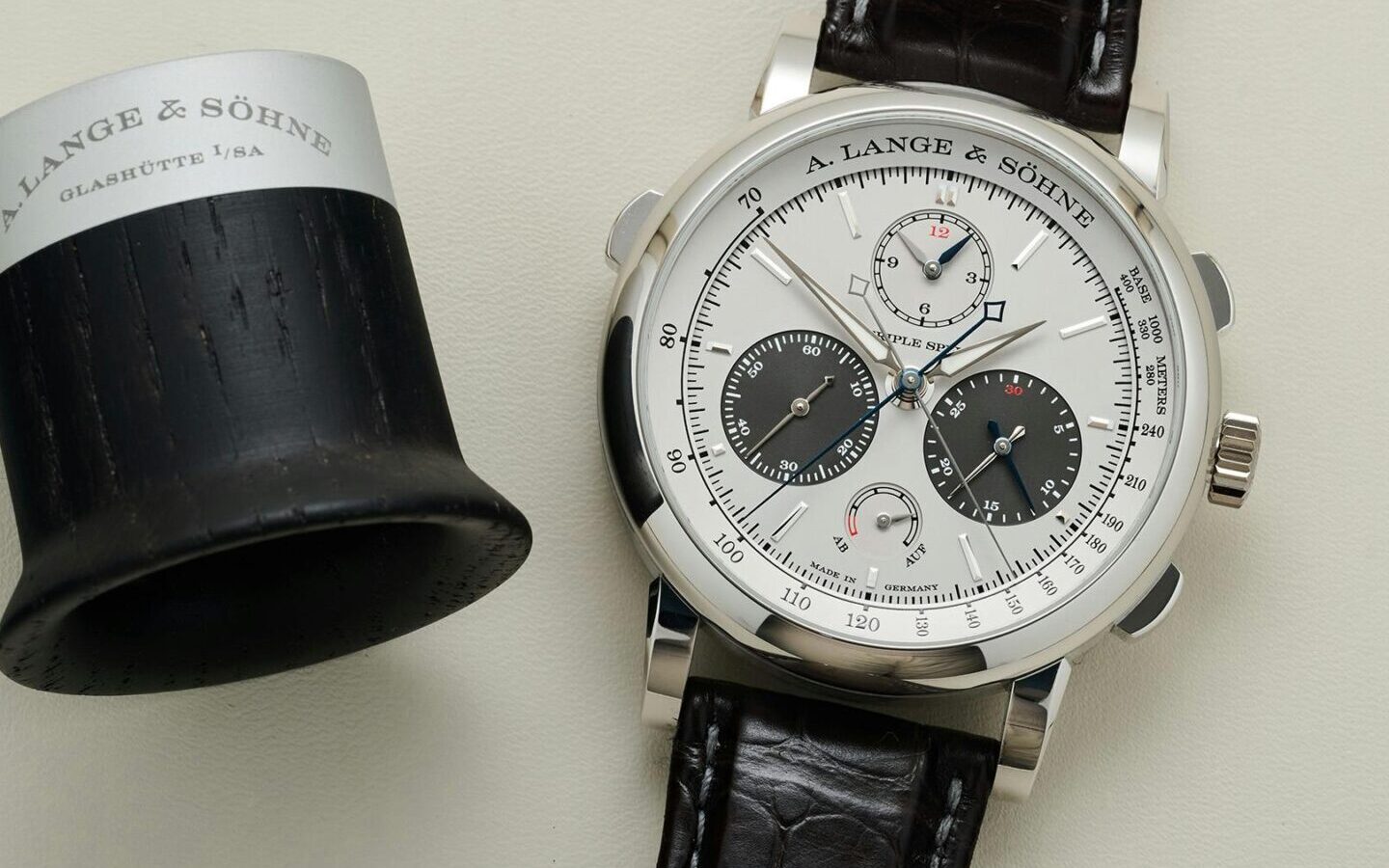
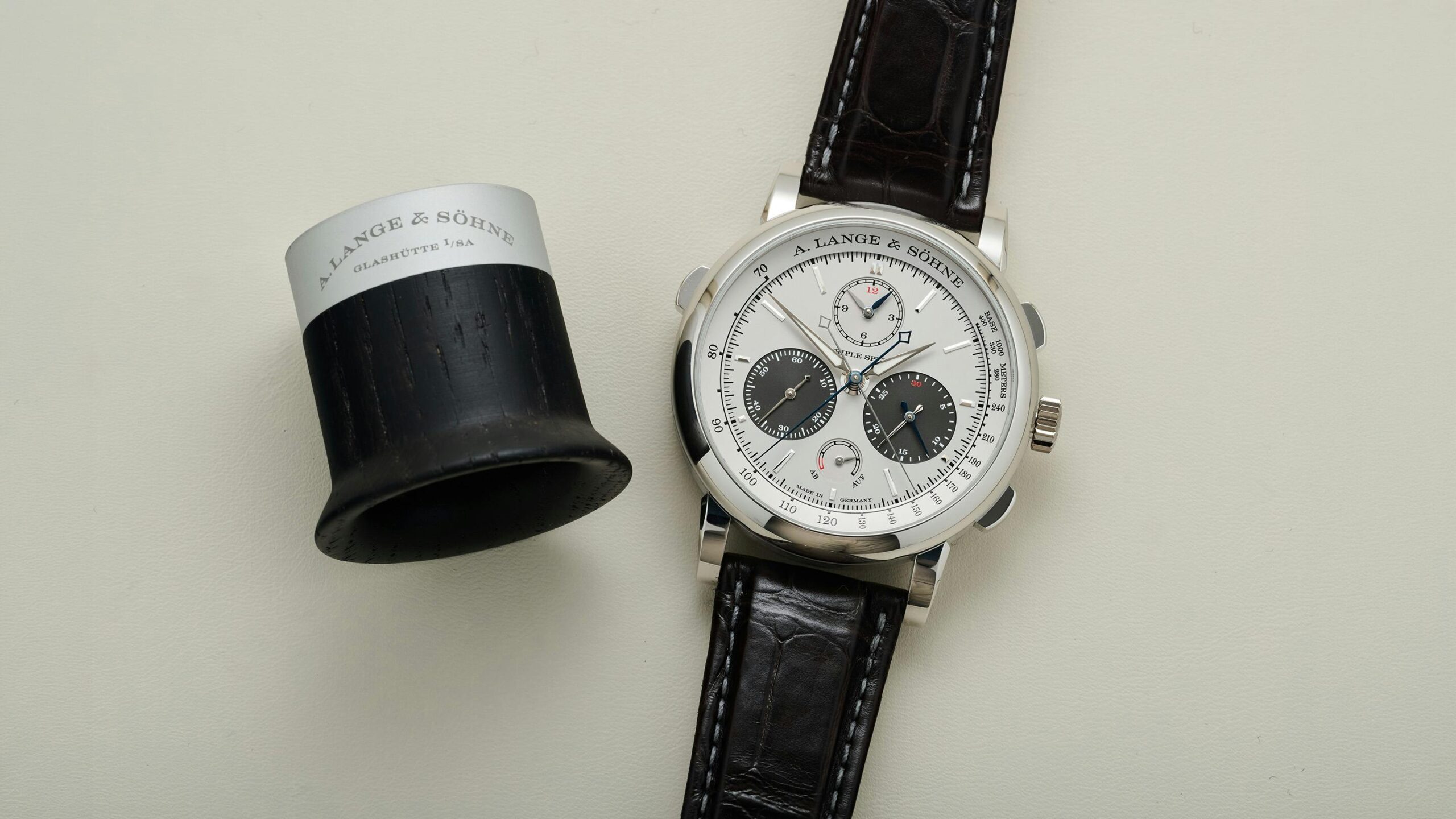
A. Lange & Söhne has reintroduced the Triple Split, its split-seconds chronograph capable of comparing elapsed times up to 12 hours, in a new case metal variant. The announcement came via Hodinkee’s live pics coverage on September 4, 2026, marking the return of one of the German manufacturer’s most mechanically dense chronograph designs to current production.
The Triple Split’s defining engineering trait has always been its triple rattrapante function: independent split mechanisms for the chronograph seconds, the 30-minute counter, and the 12-hour counter, allowing a wearer to time two separate events simultaneously across a full half-day span rather than just a single lap or interval. That three-tier split architecture is what separates it from a conventional double split, and it’s also what makes the dial such a demanding piece of layout work. Three chronograph functions each need their own hand, their own scale, and their own moment of visual priority, all without the dial collapsing into visual noise.
Case Design and Material Change
The headline change in this return is the case metal itself, a shift in material that alters the watch’s presence on the wrist without touching the underlying architecture of the movement or the layout of the dial. A metal case variant of this kind typically changes the interplay of light across the bezel and lugs, and it shifts the overall weight and tactile character of the piece in ways that matter more in daily wear than in photographs. Beyond confirming that this is a new metal execution of the Triple Split, the available reporting does not detail further case dimensions, so any assumptions about size or lug geometry would be speculation rather than fact.
Dial Layering and Legibility Engineering
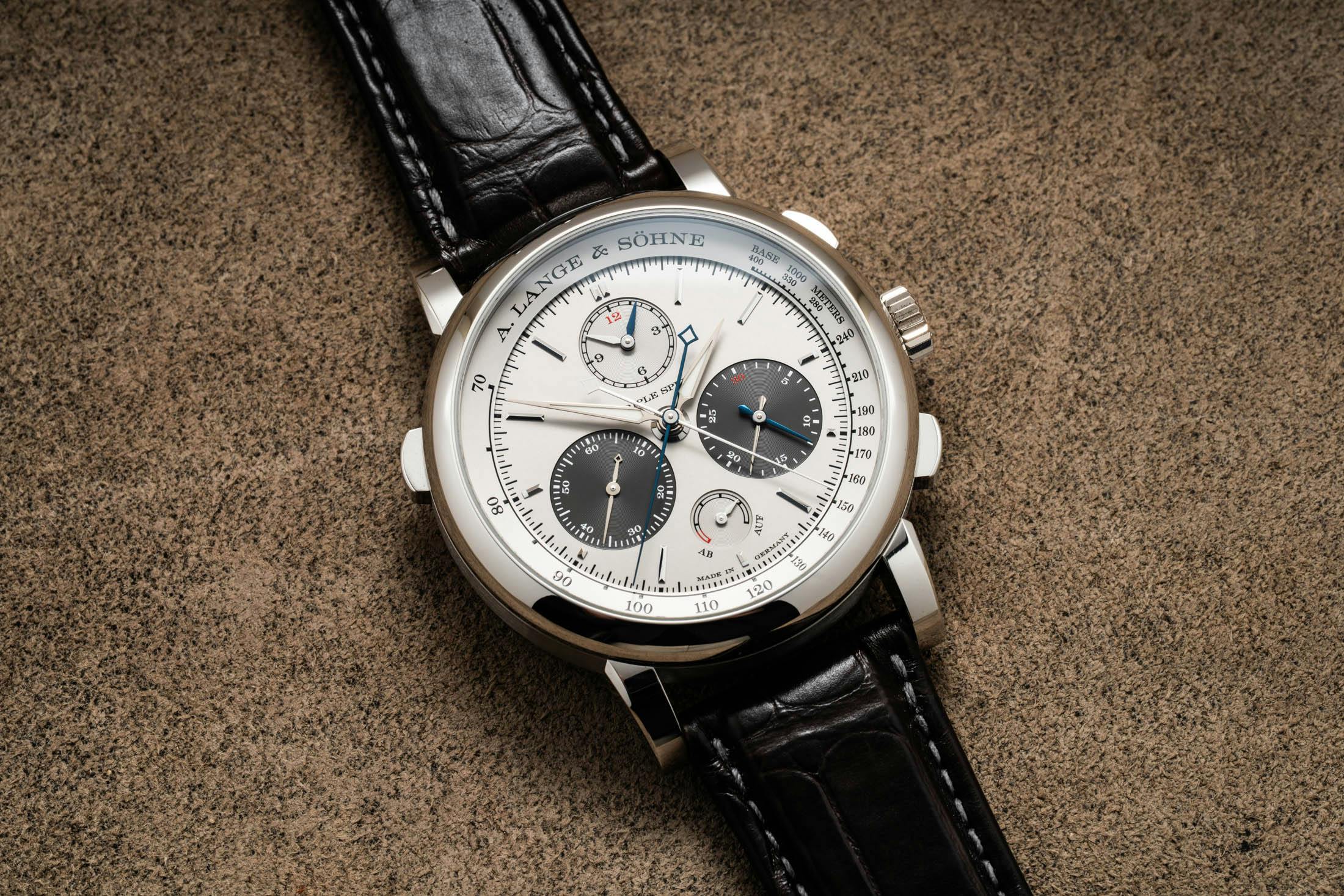
What makes the Triple Split worth studying from a design standpoint is how it resolves the competing demands of three chronograph functions on one dial. Each split mechanism needs a hand pair, sometimes stacked coaxially, sometimes offset onto a sub-register, and every added layer of hands increases the risk of visual collision at a glance. The chronograph’s job is to let a wearer read two competing times cleanly under pressure, whether that’s a race, a race-adjacent test, or any scenario where two elapsed durations need comparing in real time. A dial that buries that information under decorative complexity defeats the purpose of the complication.
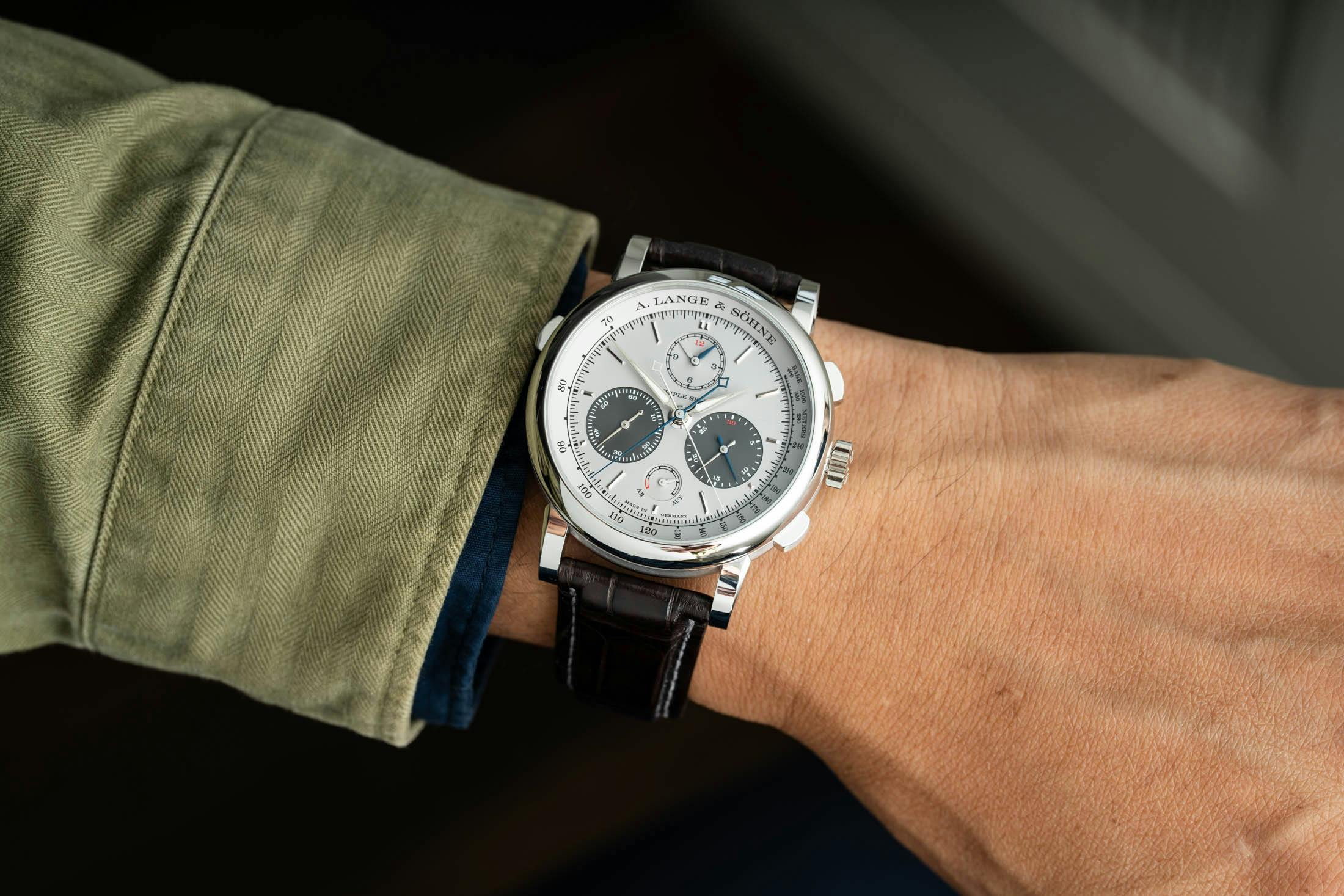
This is the tension that any split-seconds chronograph designer has to manage: the more timing functions you stack, the more the dial has to work to keep each one instantly identifiable. Hand shapes, counter depths, and printed scale hierarchies all become tools for separating the three split functions from one another, so a wearer’s eye can find the seconds rattrapante, the 30-minute split, and the 12-hour split without hesitation. The metal case update gives Lange’s designers a fresh canvas to refine that hierarchy, even as the fundamental complication and its three independent rattrapante mechanisms remain the through-line from the model’s prior execution.
What the Return Signals
Bringing the Triple Split back in a new metal, rather than retiring the complication or leaving it dormant, tells you something about where A. Lange & Söhne sees continued demand: for a chronograph that does more than most collectors will ever need, but that rewards close study of its dial and case execution. The reporting to date centers on live photography from the announcement, with further technical detail expected as retailers and the brand release fuller specification sheets. Anyone evaluating this piece up close should look closely at how the case metal interacts with the dial’s printed and applied elements, since that relationship, more than any single spec, will define how the watch reads on the wrist in daily conditions.