
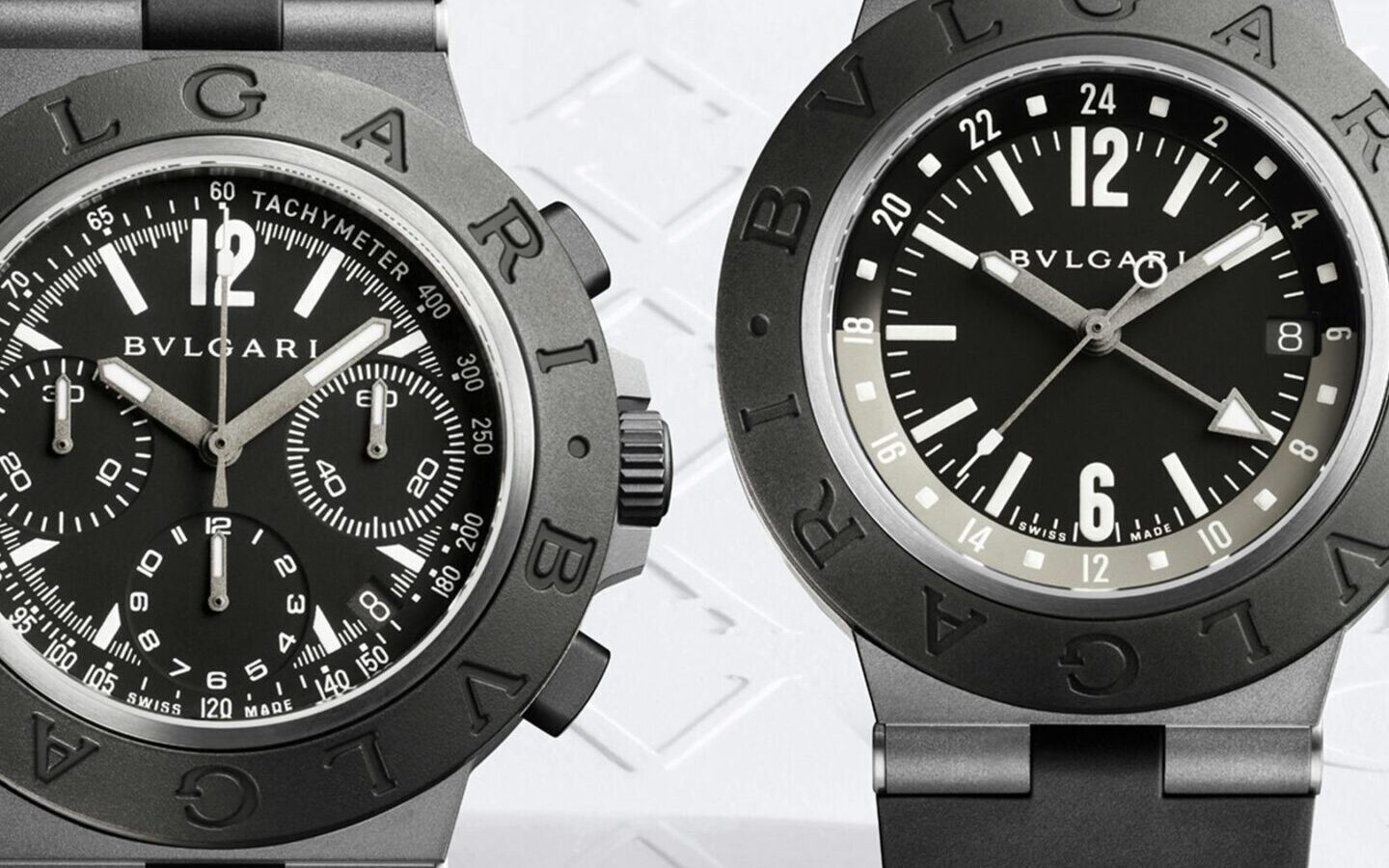
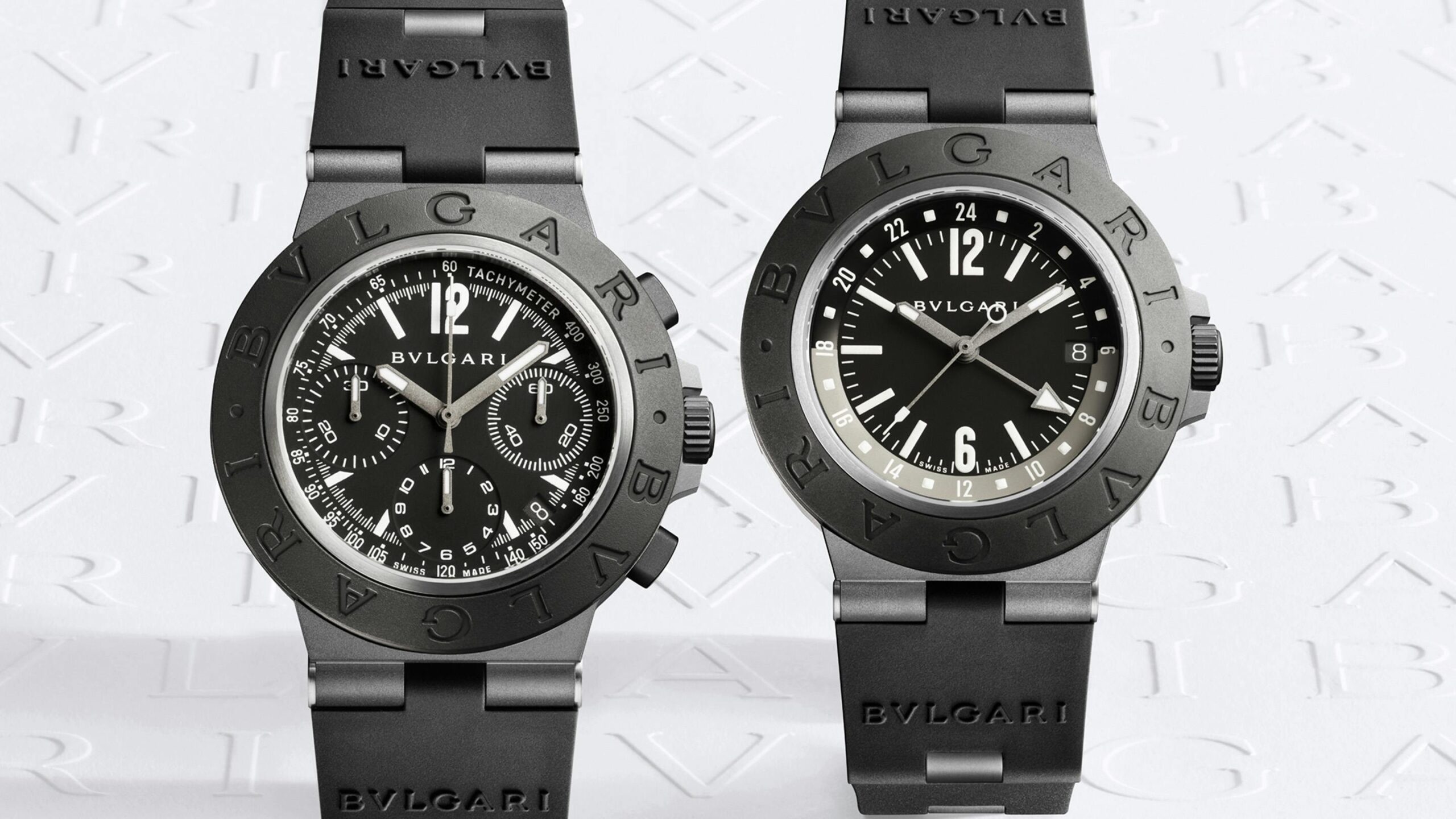
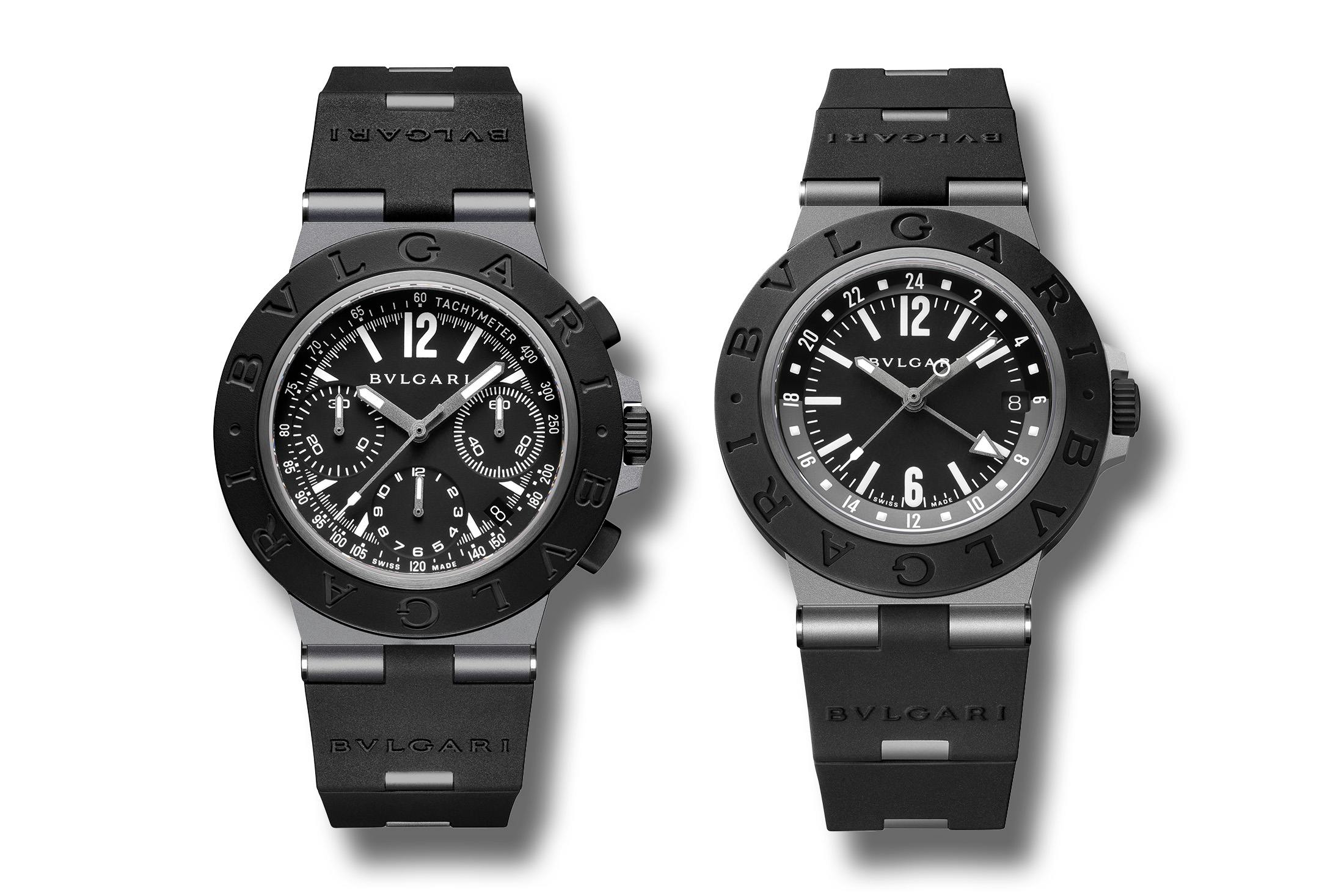
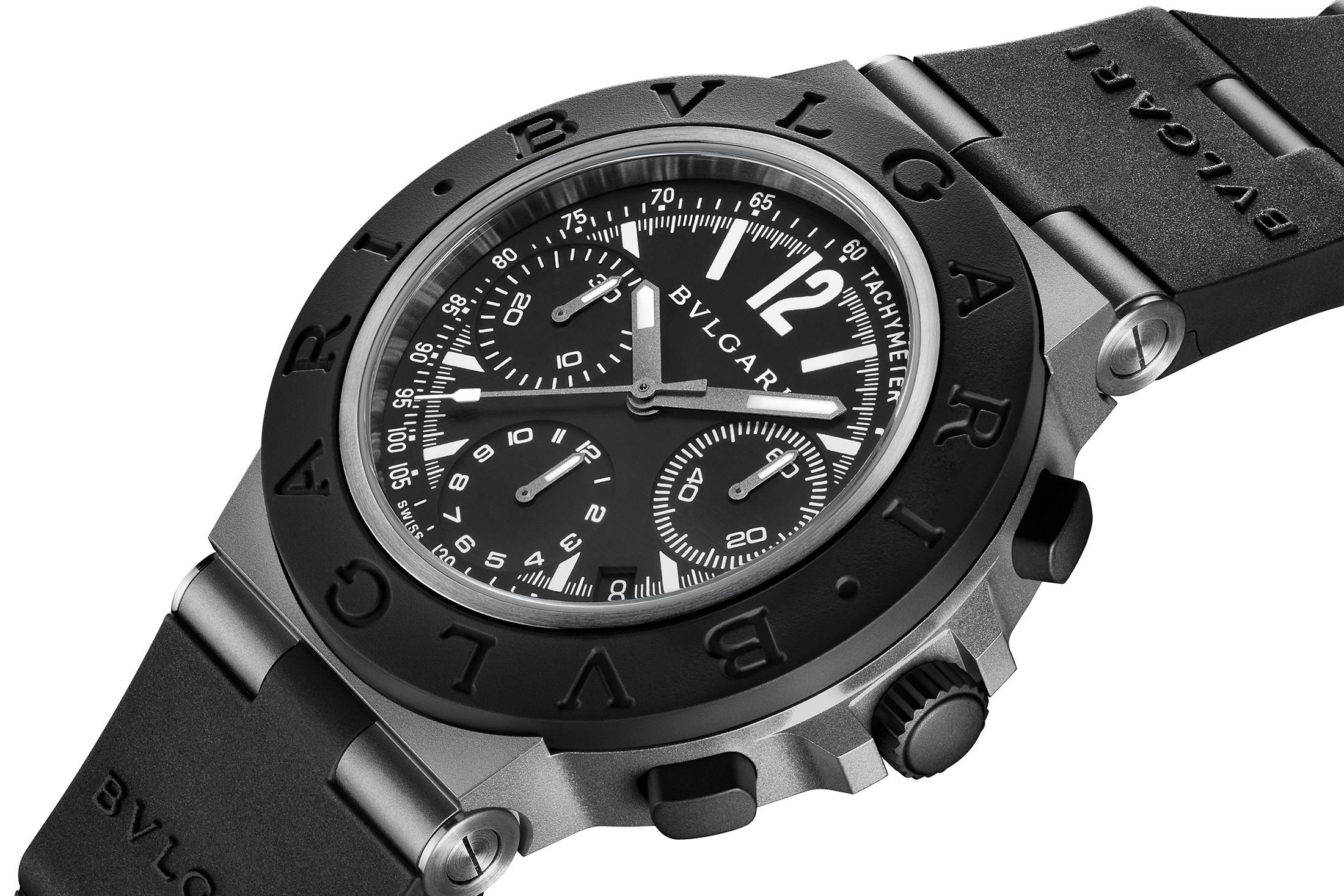
Announced in September 2026, the Bulgari Titanio Chronograph and GMT represent a deliberate pivot in how the brand constructs and finishes its sport-oriented references. The move from aluminum and bronze — materials that defined the line’s earlier character — to titanium is not simply a substitution. It pulls the entire design language in a different direction, touching wearability, surface treatment, and the visual relationship between the case and dial in ways that are worth examining closely.
Why Titanium Changes the Conversation
Aluminum is light and takes anodized color well, but it scratches easily and carries a certain informality that limits how far a luxury brand can push it. Bronze ages visibly and develops patina that some wearers find appealing and others find difficult to manage. Titanium sits in a more resolved position: it is lighter than steel, substantially harder than aluminum in most alloy grades, and it accepts both brushed and polished finishing with a distinctly cooler, more neutral tone than either of its predecessors in this line.
That neutrality is not a weakness. For a brand like Bulgari, which has always worked with strong color and material contrast in its jewelry vocabulary, a case material that recedes slightly — that does not compete with the dial — gives the designer more room to work. The shift to titanium in the Titanio line reads as a decision to let surface treatment and geometry carry the visual load rather than relying on the inherent warmth of bronze or the saturated color of anodized aluminum.
Surface Treatment and the Logic of Contrast
In practice, titanium’s finishing behavior is one of its most useful properties from a design standpoint. The metal holds a brushed finish with a fine, consistent grain that reads as matte under most lighting conditions, while polished sections on the same case snap to a bright, almost mirror-like surface. That contrast — between satin-brushed flanks and polished edges or bezel surfaces — is a standard technique in sport watch case construction, but titanium executes it with a particular crispness. The transition between the two states is sharper than it tends to be on steel, partly because titanium’s lower reflectivity in its brushed state makes the polished zones read as brighter by comparison.
This is directly relevant to how the Titanio Chronograph and GMT wear on the wrist. A case that uses strong finish contrast tends to read as more articulated, more three-dimensional, even when the geometry itself is relatively straightforward. The eye picks up the boundary between matte and polished as a structural edge, which can make a case appear more precisely engineered than a uniformly finished piece of the same dimensions.
Ergonomics and the Weight Argument
The practical case for titanium in a chronograph or GMT is straightforward. Both complications add movement architecture — additional levers, cams, and wheels in the chronograph; a second time-zone mechanism in the GMT — and that added mechanical content typically means a thicker, heavier case. Titanium’s density advantage over steel means the case itself contributes less to total weight, which partially offsets the mass added by the complication. For a watch worn daily across time zones or used actively, that balance matters more than it might on a dress piece worn for a few hours.
The Titanio line’s sport brief also implies a bracelet or strap that needs to flex and conform to the wrist through movement. A lighter case reduces the leverage effect that causes heavier watches to shift and rotate on the wrist during activity — a genuine ergonomic consideration that is easy to understate when discussing materials in the abstract.
What the Two References Reveal About the Line’s Direction
Offering both a chronograph and a GMT in the same material and design language is a coherent strategy. The two complications serve different functional needs — one oriented toward elapsed-time measurement, the other toward managing multiple time zones — but they share a user profile: someone who travels, works across contexts, and wants a single watch capable of handling both. Titanium suits that profile well. It is durable enough for frequent wear, light enough to be unobtrusive, and neutral enough in tone to move between settings without announcing itself.
The Titanio Chronograph and GMT together suggest that Bulgari is building out a sport segment with genuine material discipline rather than cycling through fashionable case metals. Whether the line extends further — additional complications, different dial configurations — will depend on how this titanium execution is received. But as a foundation, the material choice is technically sound and the design logic behind it is consistent.