

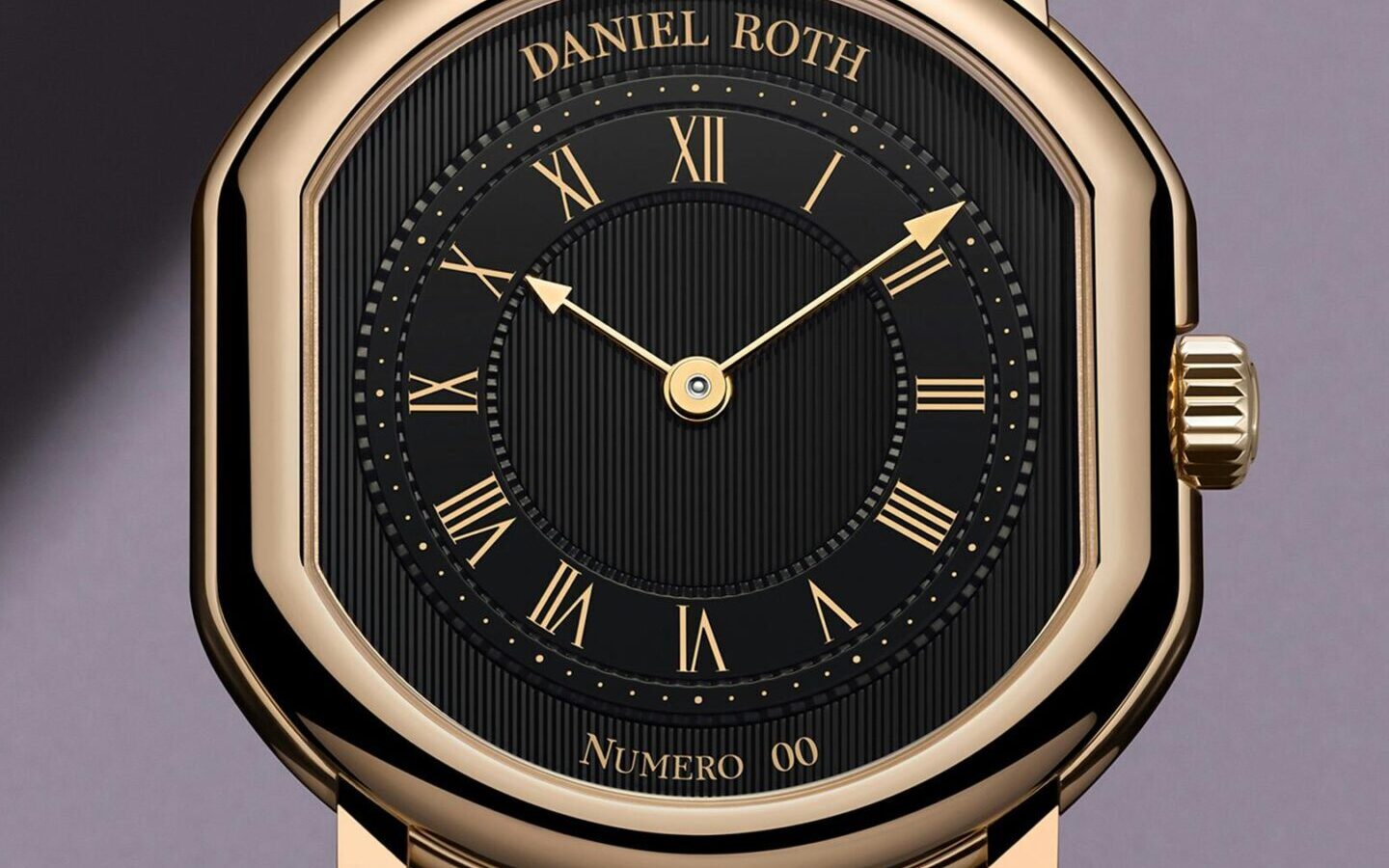
The Daniel Roth Extra Plat Rose Gold Gilt, released in September 2026 under La Fabrique du Temps Louis Vuitton, is built around a specific finishing decision that runs from the dial surface through to the case material and back again. The watch measures 38.6mm x 35.5mm and sits 7.7mm thick — compact proportions for a manually wound dress piece — and the case is machined from 5N rose gold with a fully polished finish. That warmth in the metal is not incidental. It is the anchor point for everything happening on the dial.
The Gilt Dial Process and What It Actually Involves
The dial base is made of gold. From there, a single artisan executes a pinstripe guilloché pattern using a traditional rose engine — a process that cannot be rushed or automated without losing the slight irregularity that gives hand-turned guilloché its character. Once the pattern is cut, the surface goes through multiple electroplating treatments to build up a deep black finish across the entire dial.
The Roman numerals, the Daniel Roth signature, and the individual dial number are not printed onto this surface. Instead, they are masked before the electroplating begins. When the masking is removed after the plating process is complete, the underlying gold is exposed in precisely those areas, making the indications appear to emerge from the black ground rather than sit on top of it. The result is a dial where the gold minute track and rose-gold indications read as part of the material itself, not as a decorative layer applied afterward.
This matters structurally. Printed or applied indices on a guilloché dial always create a slight visual tension — the index sits above the texture, interrupting it. The masking approach used here means the guilloché pattern runs continuously beneath the numerals; the texture and the indication occupy the same plane. Against the black electroplated ground, the revealed gold reads with considerably more depth than a conventional printed numeral would.
Case Construction and the Double-Ellipse Profile
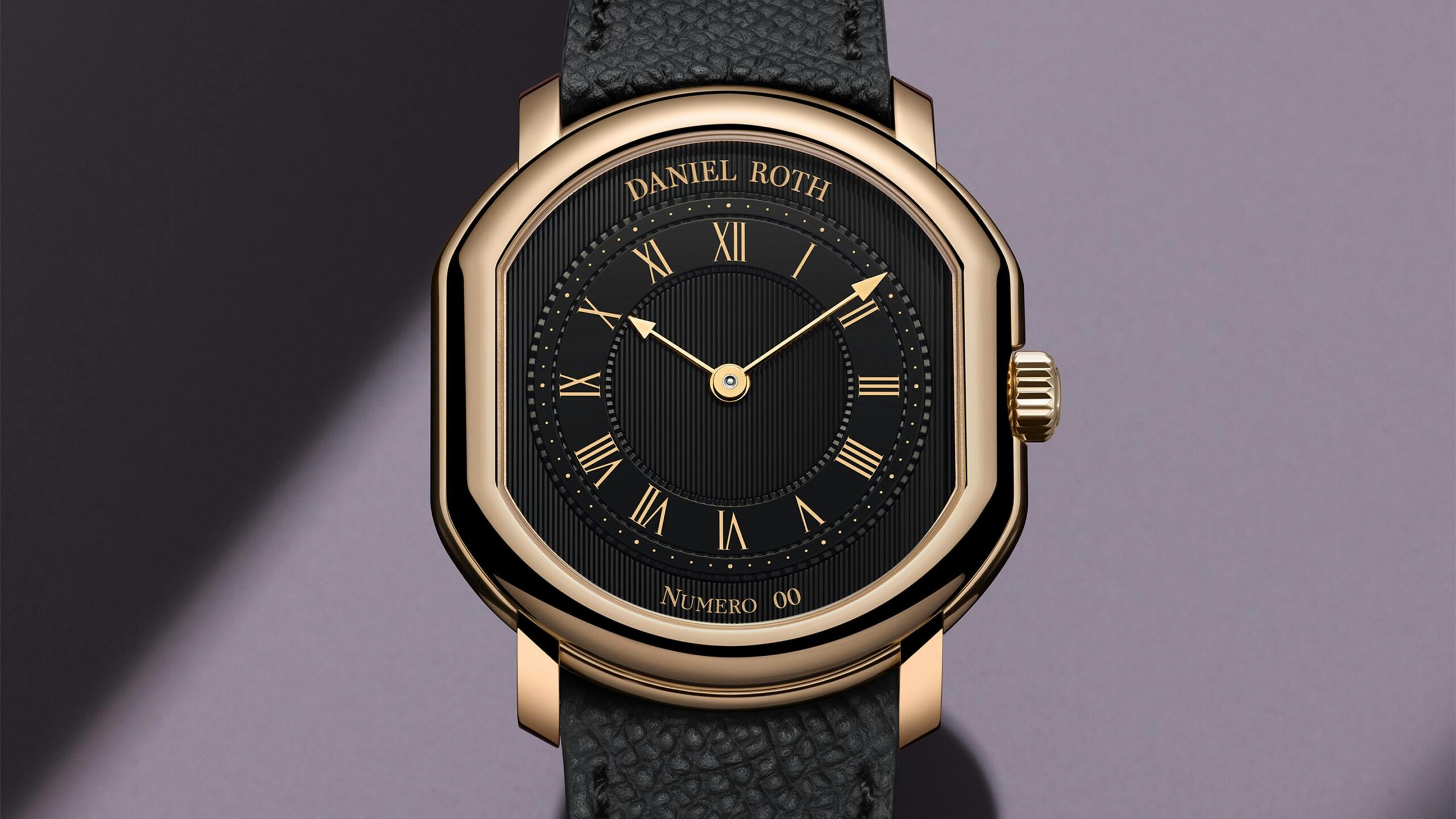
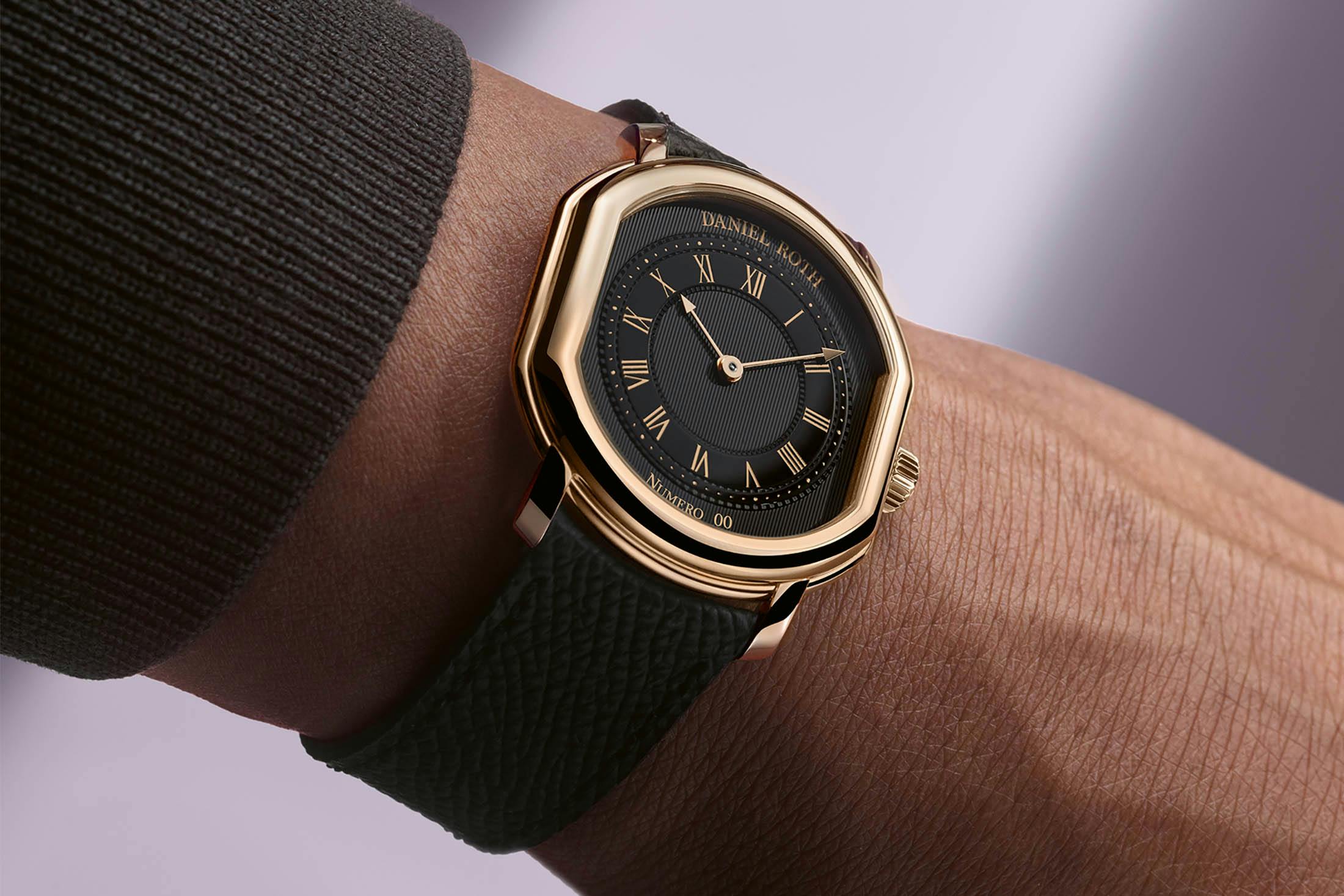
The case geometry is the other constant in this watch’s identity. The double-ellipse form — two overlapping ellipses producing the characteristic ellipsocurvex profile — is finished here with the central gadroon that runs along the case’s equator. On a fully polished case in 5N rose gold, that gadroon catches light differently depending on the viewing angle, which gives the 38.6mm width a sense of movement it would not have on a flat-sided case.
A flat anti-reflective sapphire crystal covers the dial, keeping the profile as low as possible and avoiding the distortion that a domed crystal would introduce over a guilloché surface. The caseback is also sapphire, exposing the movement. Water resistance is rated to 30 metres — appropriate for a dress watch of this construction and not a figure that should be pushed.
Calibre DR002: Movement Architecture and Finishing
The movement is the manufacture Calibre DR002, developed and assembled at La Fabrique du Temps Louis Vuitton. It is a manually wound calibre shaped specifically for the Extra Plat case, measuring 31mm x 28mm and 3.1mm thick. Those dimensions leave very little room for error in the finishing work — at 3.1mm, every surface is visible and there is nowhere to hide poor bevelling or inconsistent anglage.
The DR002 comprises 143 components across 21 jewels, runs at 28,800 vibrations per hour, and delivers a 65-hour power reserve from a manual wind. The winding mechanism uses a bar click, which provides a tactile, defined feel during winding rather than the softer engagement of a conventional click spring. Decorative finishing includes Geneva stripes, hand-polished bevels, defined interior angles, polished countersinks, mirror-polished steel parts, circular-brushed wheels with bevelled spokes, and a circular-grained main plate. The strap attaches at a 20mm lug width via curved spring bars, closing with a gold pin buckle.
What the Material Pairing Communicates
Pairing 5N rose gold with a black gilt dial is not a neutral combination. Rose gold reads warmer and softer than white gold or platinum, and against a deep black electroplated surface, the revealed gold indications carry more visual weight than they would on a lighter dial. The glossy black background, the gold minute track, and the rose-gold numerals create a tonal contrast that gives this version of the Extra Plat a more formal, dramatic character than the lighter dial variants in the collection.
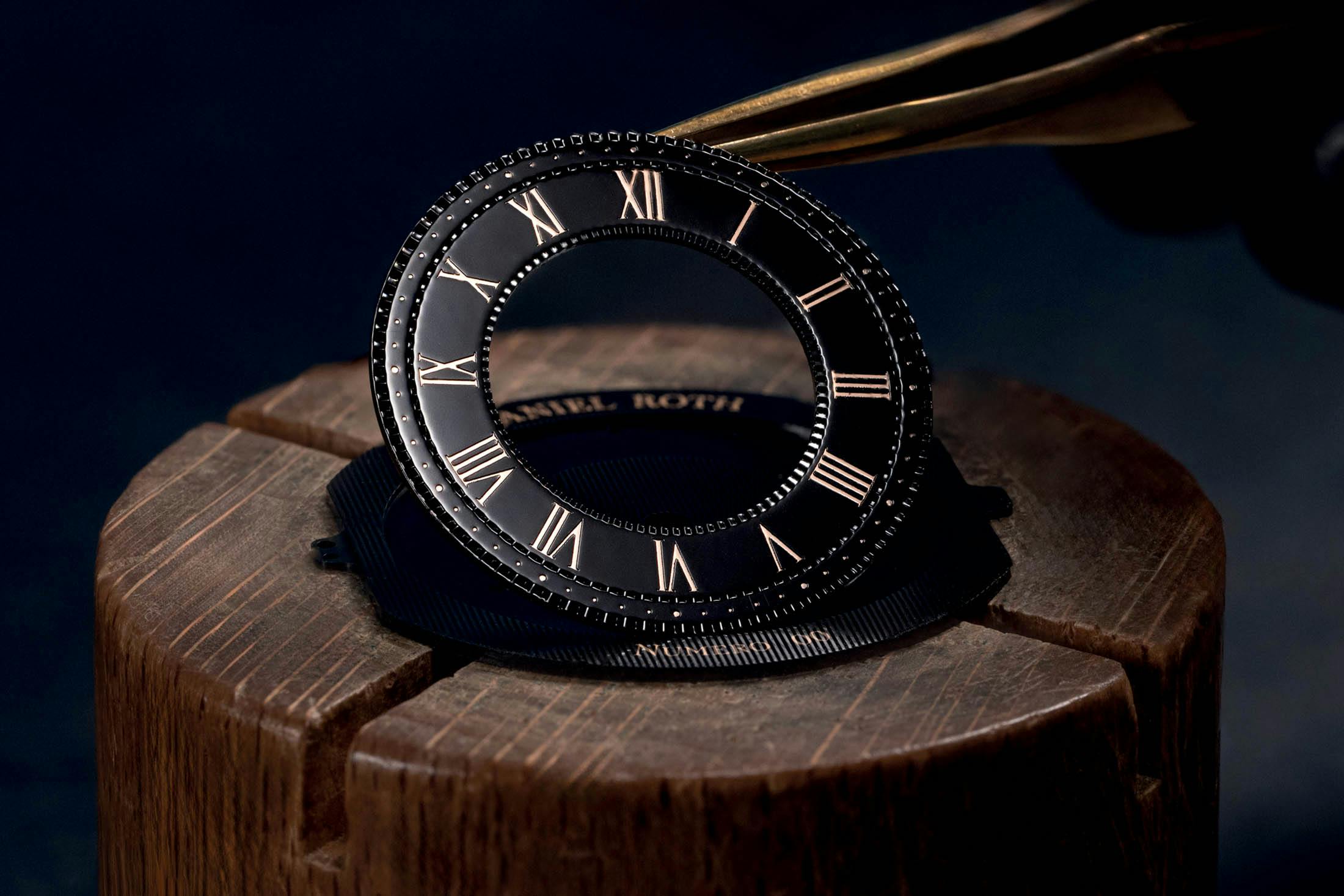
From a design studio perspective, the coherence here is in the restraint. The case material, the dial base material, and the revealed indication material are all variations of gold — 5N for the case, gold for the dial base and minute track, rose gold for the numerals. The black electroplating is the only interruption, and it exists specifically to make the gold more legible. Nothing is introduced that does not serve the reading of the dial or the integrity of the case form.
Production of the Extra Plat Rose Gold Gilt is limited by manufacturing capacity, which given the hand-executed guilloché and the multi-stage electroplating process is a straightforward constraint rather than a marketing position. The reference is DBBD04A1, available from September 2026. For studios and designers tracking how classical finishing techniques are being reintegrated into contemporary manufacture-level production, this execution of the gilt dial process is a technically specific example worth examining closely.